
Return to Running Postpartum: Pelvic Floor, Core, and Hip Readiness
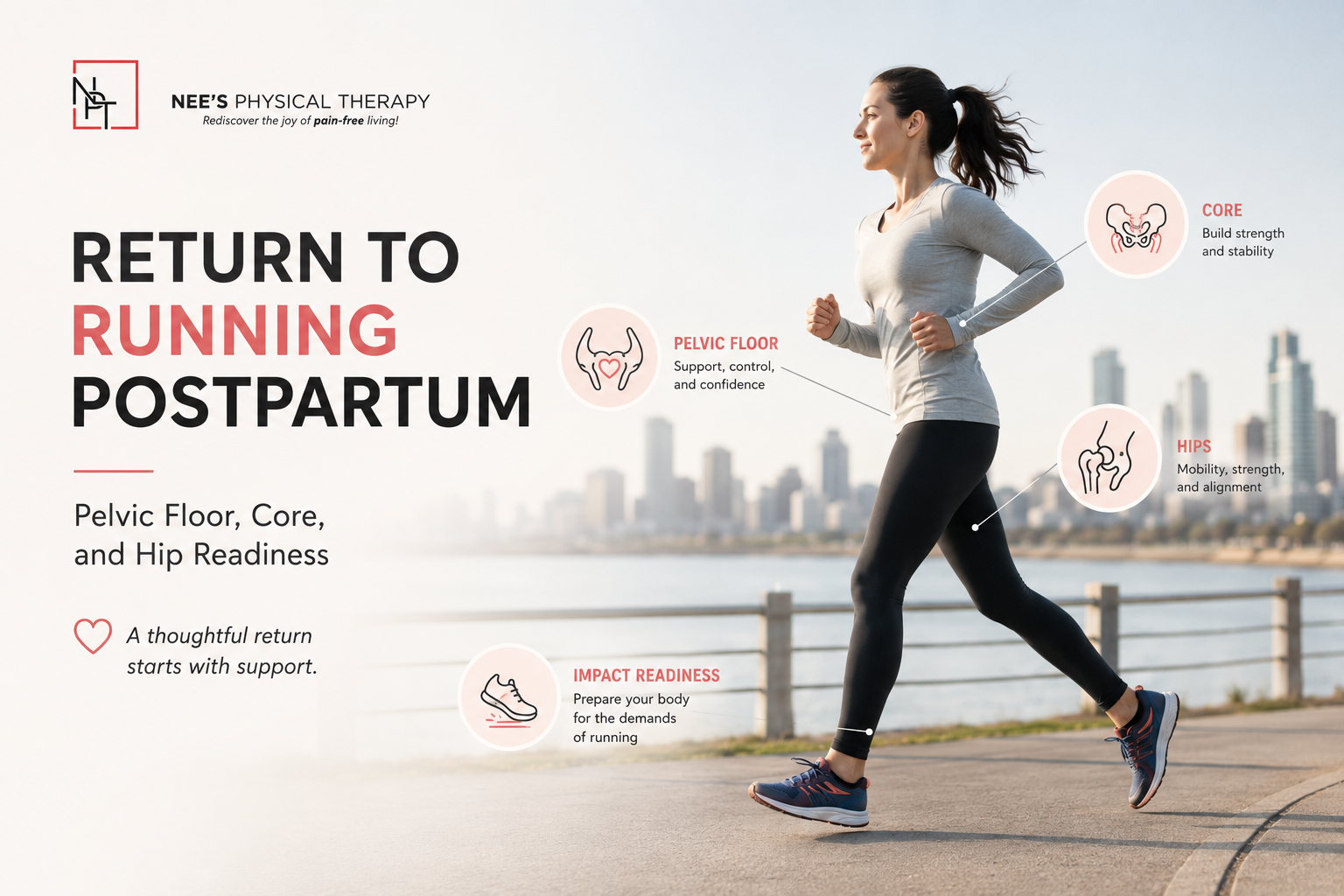
Return to running postpartum can feel emotional, confusing, and deeply personal. You may miss the freedom of putting on your shoes and heading out without thinking twice. You may also feel nervous because your body feels different now. Maybe there is leaking, pressure, heaviness, hip pain, core weakness, or a sense that something does not feel fully supported.
If that is where you are, you are not behind.
Pregnancy, birth, healing, feeding, sleep changes, lifting, carrying, and daily recovery all place real demands on your body. Running adds another layer because it is a high-impact activity. Every step asks your pelvic floor, core, hips, legs, breath, and nervous system to work together.
A safe return to running postpartum starts with understanding how your body is managing impact, pressure, strength, and movement right now.
Why Postpartum Running Deserves a Thoughtful Return
Many women are told they can resume exercise after a postpartum checkup. That clearance is important, but running readiness often needs a closer look.
Running is repetitive. It places force through the body with every landing. The pelvic floor responds to that force. The core helps manage pressure. The hips and glutes support the pelvis. The breath helps coordinate the whole system.
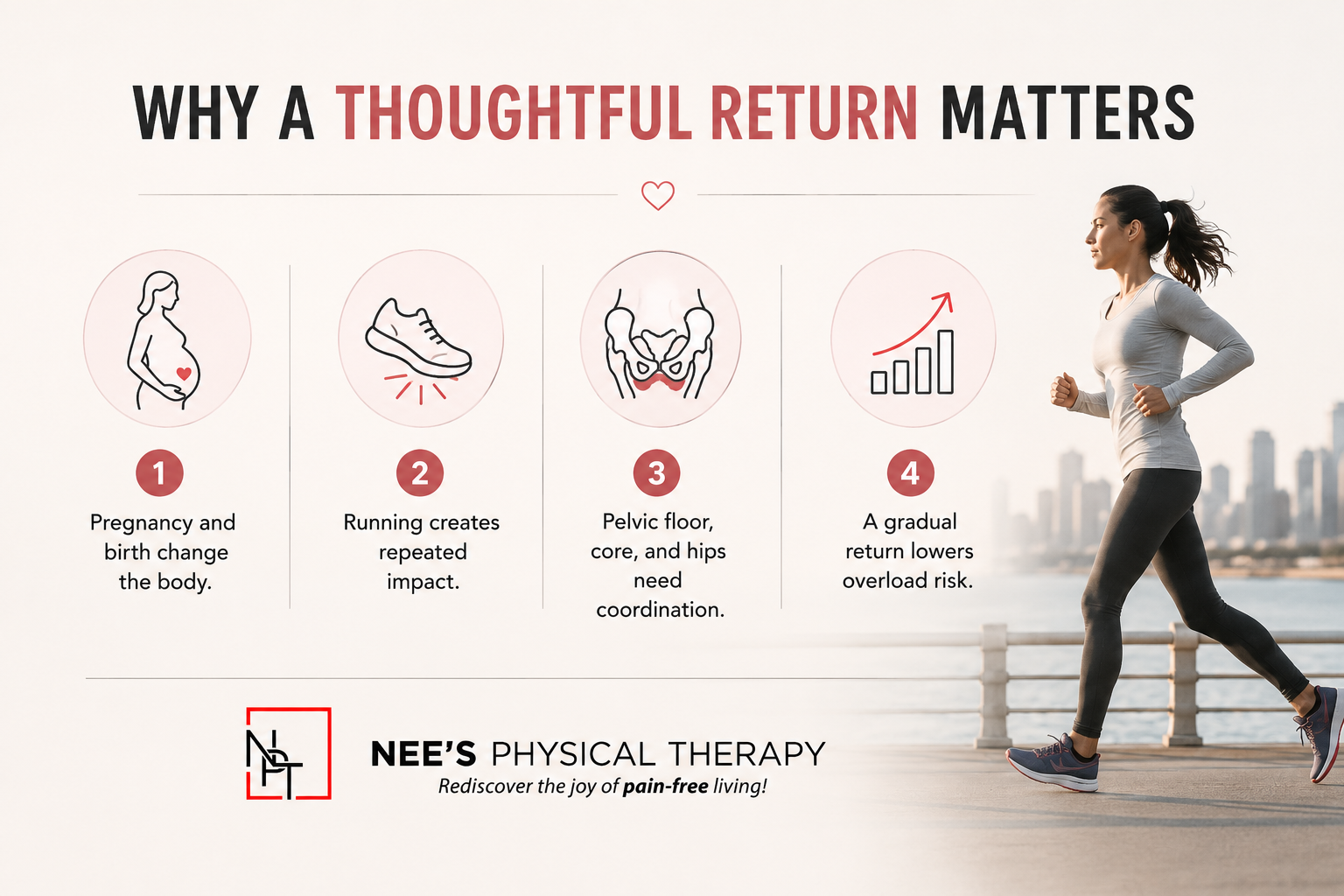
After pregnancy and birth, this system may need time and guidance to feel connected again.
You may feel strong in some ways and unsure in others. You may be able to walk for a while, but feel pressure when you try to jog. You may feel fine during a short run, only to notice heaviness later in the day. You may feel your hips working harder than before. You may notice your core gripping or your breath holding when effort increases.
These are all signals worth listening to.
Your body is giving you information. The goal is to understand that information carefully, not to push through it or panic.
Signs Your Body May Need More Support Before Running
Some postpartum symptoms are common, but they still deserve attention. You do not have to accept leaking, pressure, or pain as the price of becoming a mother.
Before returning to running postpartum, pay attention to symptoms such as:
Leaking urine when walking, jumping, coughing, or jogging
Pelvic heaviness or pressure
A dragging sensation in the pelvis
Pelvic pain, tailbone pain, hip pain, or low back pain
Doming or bulging through the abdomen
Pain around a C-section scar or perineal scar
Difficulty controlling your breath during movement
A feeling of instability or weakness
Symptoms that worsen later in the day or after activity
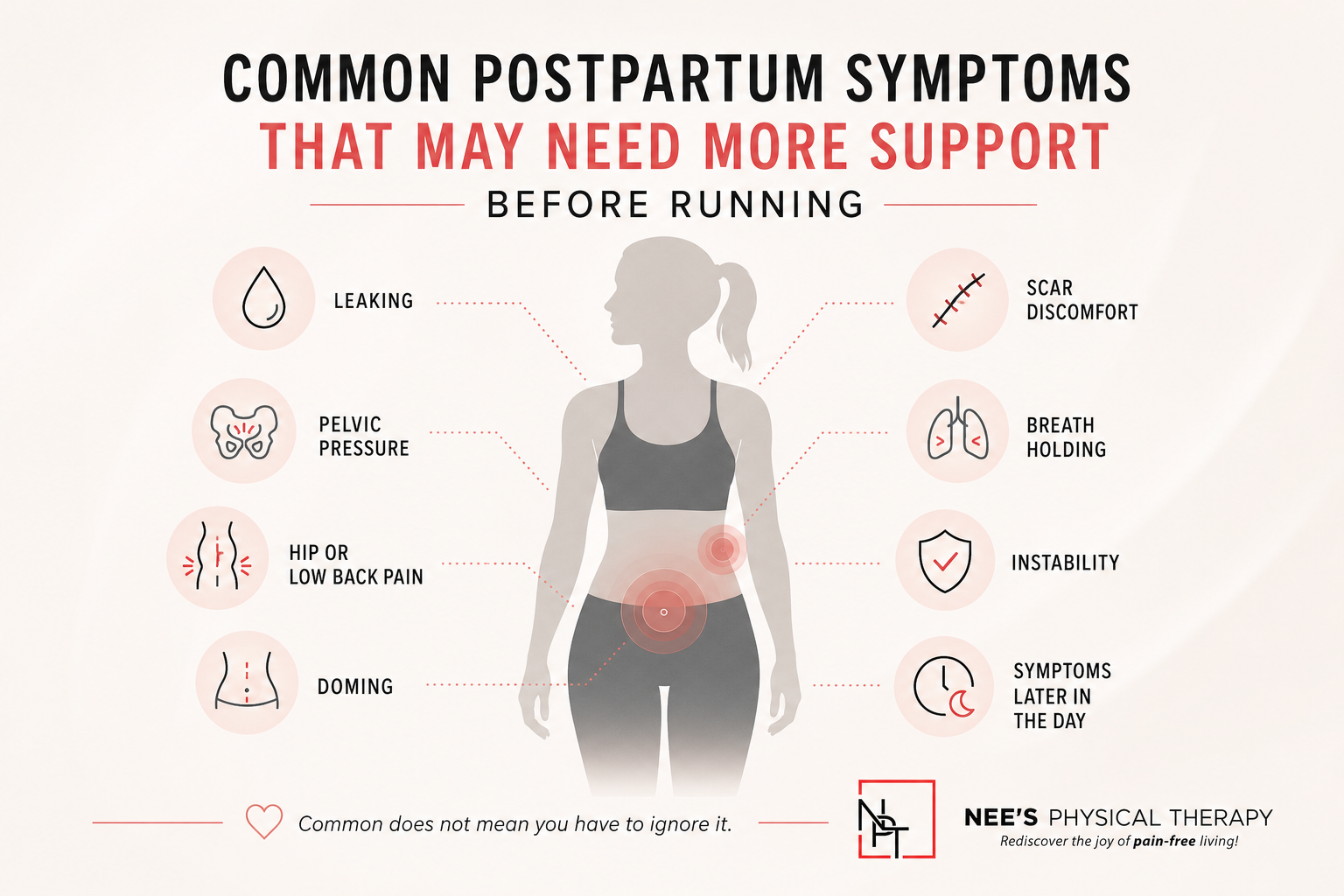
These symptoms can point to changes in pelvic floor coordination, core control, hip strength, pressure management, or overall load tolerance.
They do not mean running is off the table forever. They mean your body may need a more supported path back.
Running Readiness and Pelvic Floor Connection
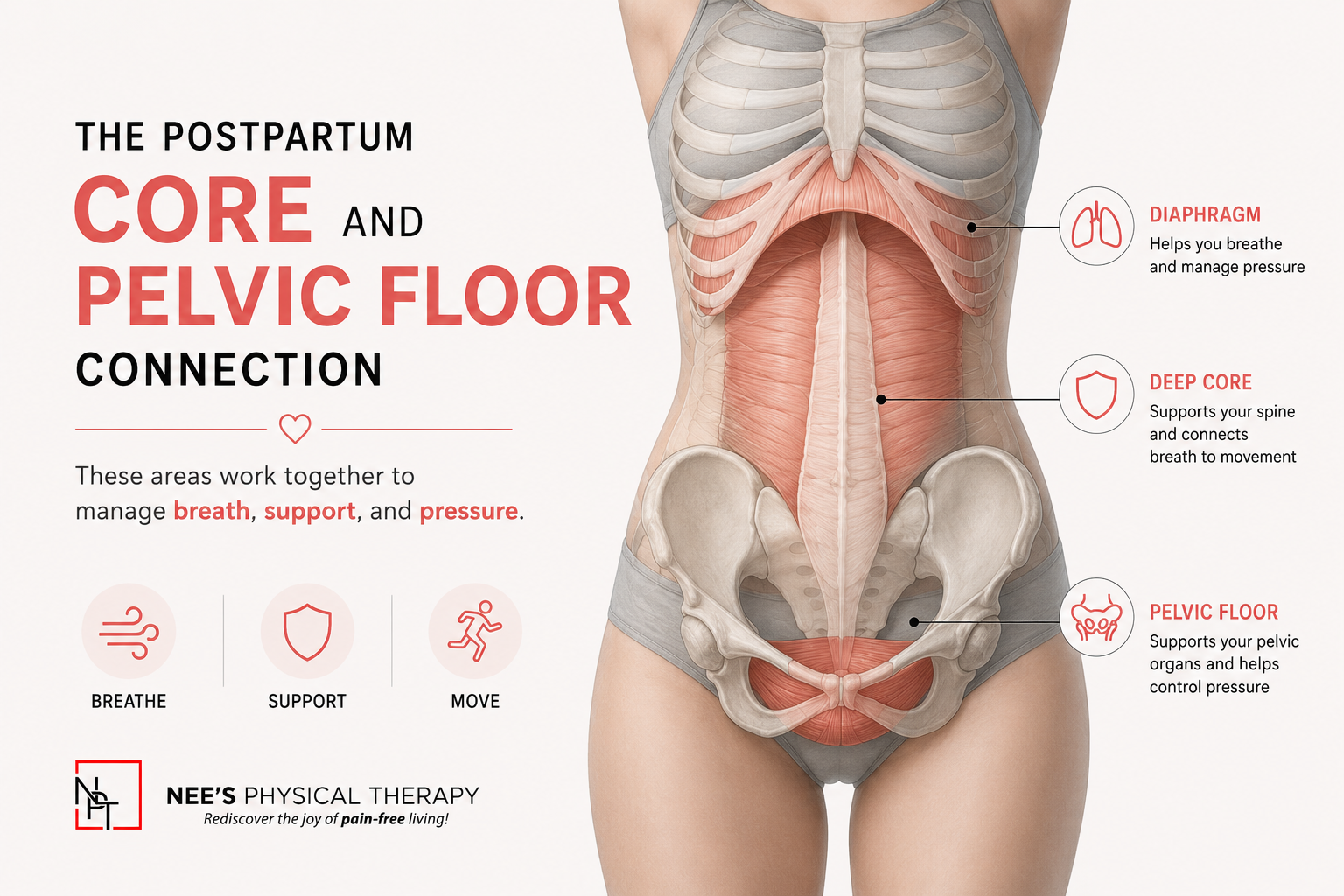
Your pelvic floor supports your pelvic organs, helps with bladder and bowel control, contributes to sexual function, and works with your core during movement. While running, it has to withstand repeated impacts.
A postpartum pelvic floor may need strength. It may also need coordination, relaxation, endurance, or better timing with breath and movement. This is why the answer is not always “do more Kegels.”
Some women need help learning how to manage pressure. Some need hip and glute strength. Some need core rehab. Some need scar mobility. Some need a slower return to impact. Some need reassurance that their symptoms make sense and can be worked through with the right plan.
Pelvic floor running readiness is about understanding what your body needs before the impact of running becomes too much, too soon.
Can External Pelvic Floor Physical Therapy Help With Return to Running Postpartum?
Yes, external pelvic floor physical therapy can help with return to running postpartum. It can be especially helpful if you want to understand your symptoms while staying fully clothed and avoiding internal treatment.
External pelvic floor PT looks at how your body moves and responds from the outside. Your therapist may assess breathing, rib position, pelvic position, core coordination, hip strength, glute activation, balance, walking mechanics, and readiness for gentle impact.
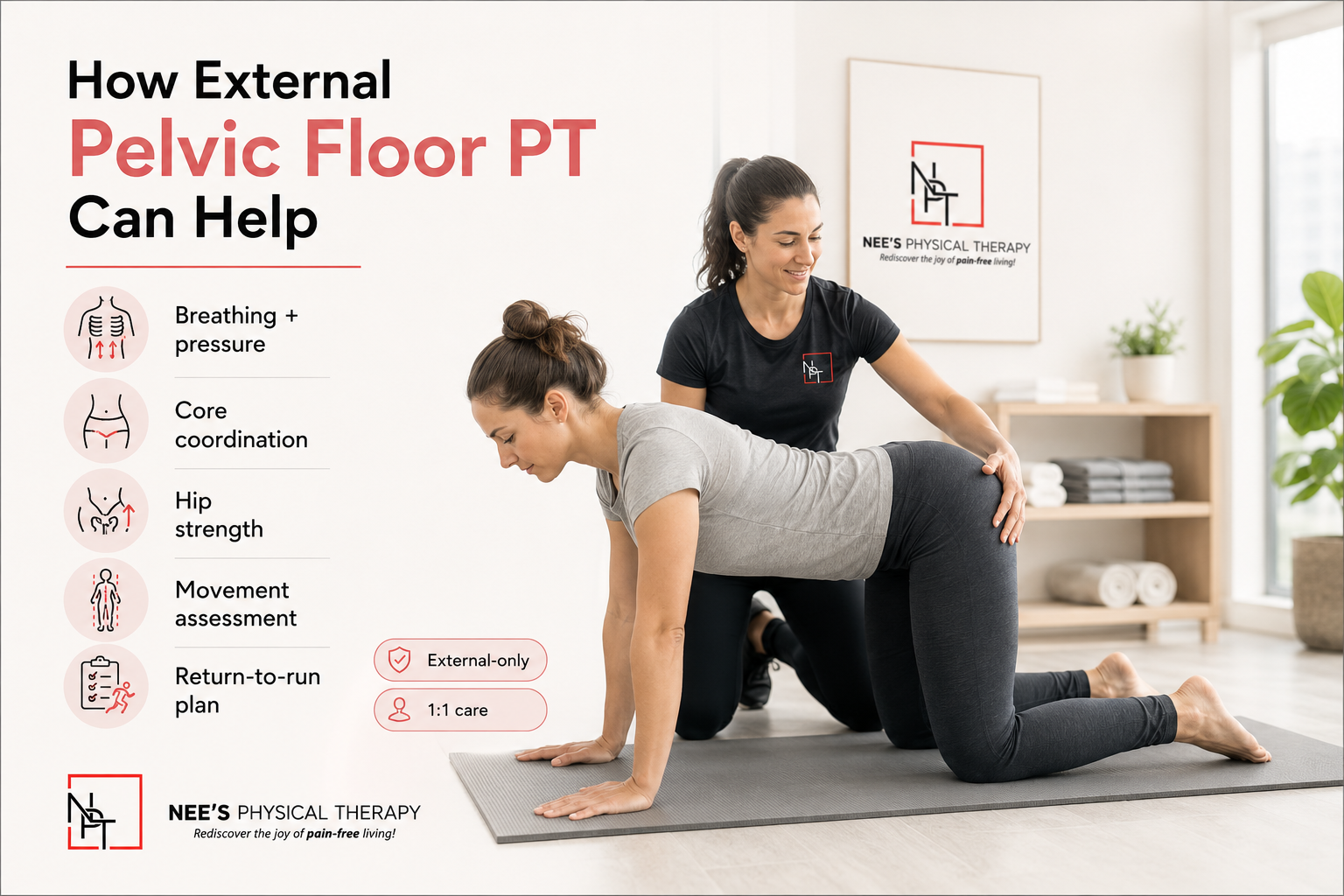
This approach can help connect symptoms such as leaking, pressure, heaviness, hip discomfort, or core weakness to how your body manages movement.
For many women, this feels like a more comfortable starting point. You can talk through what you are feeling, ask questions, and begin rebuilding confidence without feeling exposed or rushed.
At Nee’s Physical Therapy in Hoboken, External Pelvic Floor PT / Sports PT is approached with privacy, consent, and 1:1 care. The focus is on helping you understand your body and return to movement with more support.
Postpartum Core Rehab and Pressure Control
Postpartum core rehab is about rebuilding support, coordination, and pressure control.
Your core includes the diaphragm, deep abdominal muscles, back muscles, and pelvic floor. These areas work together when you breathe, lift, carry, twist, walk, climb stairs, and run.
After pregnancy and birth, this system may feel different. You may notice it when getting out of bed, lifting the car seat, carrying your baby, pushing the stroller, doing a plank, or trying to jog.
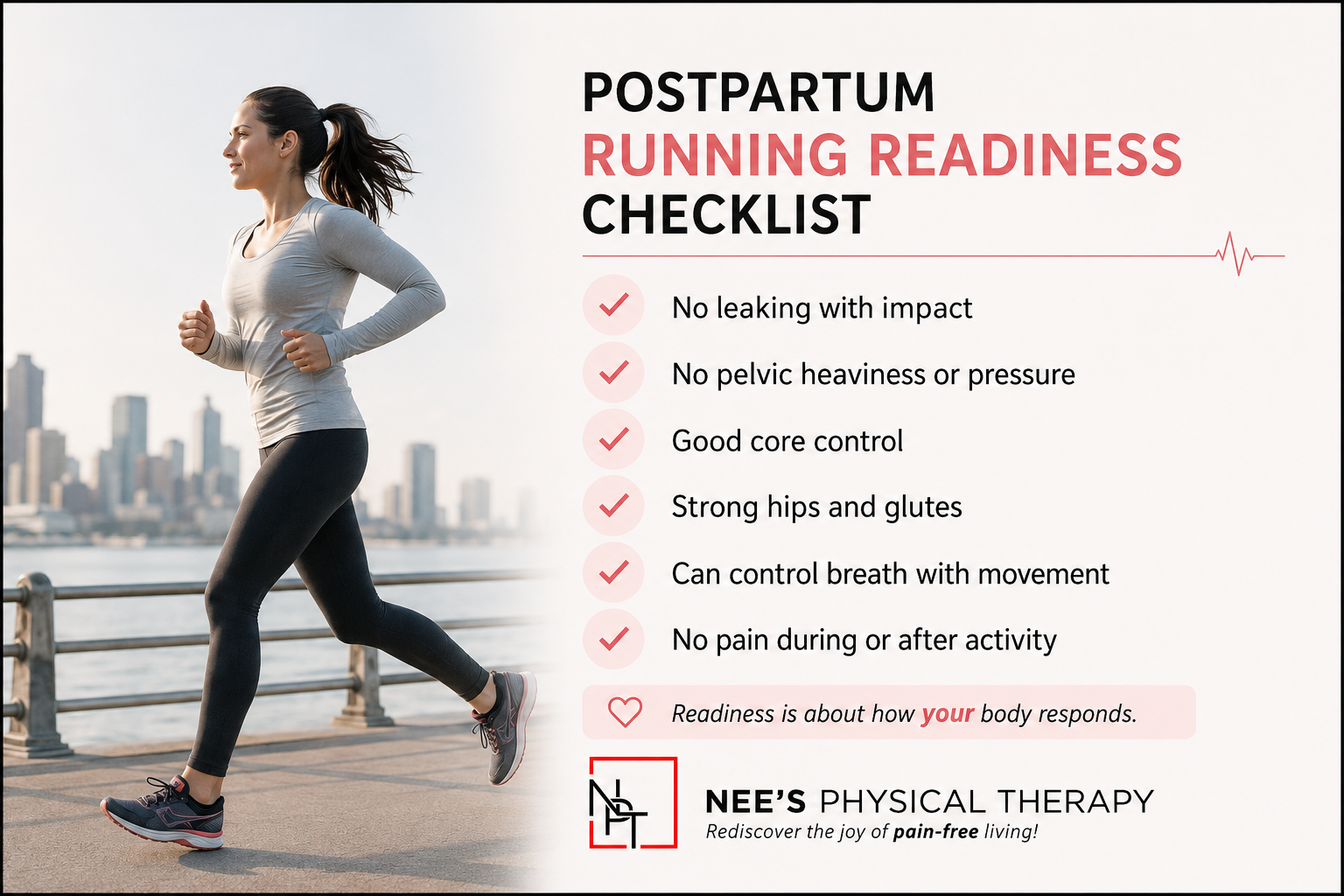
Signs that your core may need support include:
Abdominal doming
Pelvic pressure during effort
Low back strain
Feeling disconnected from your core
Holding your breath during movement
Gripping through your abdomen
Difficulty controlling movement under fatigue
A thoughtful postpartum core rehab plan may include breathing work, deep core activation, pelvic floor coordination, glute strengthening, hip mobility, scar mobility when appropriate, and gradual loading.
The goal is to help your body feel supported again during real life, not only during exercises.
Why Hip Readiness Matters for Running
Your hips play a major role in running. Every time one foot lands, your hips help control your pelvis and absorb force.
Postpartum, the hips may feel weaker, tighter, or less stable than before. This can happen because pregnancy changes posture, weight distribution, gait, and the way muscles support the pelvis. The early postpartum period also involves a lot of sitting, feeding, lifting, carrying, and moving with fatigue.
If the hips and glutes are not supporting the pelvis well, the pelvic floor and lower back may take on more work. This can contribute to pressure, pain, heaviness, or discomfort during impact.
A PT may assess:
Single-leg balance
Glute strength
Hip mobility
Step-down control
Pelvic stability
Walking mechanics
Tolerance to gentle impact
This is where an orthopedic lens can help. It connects postpartum pelvic floor symptoms with the hips, core, posture, strength, and movement patterns that affect running.
What to Expect at an External Pelvic Floor PT Appointment
An external pelvic floor PT appointment should feel private, respectful, and clearly explained.
For an external-only session, you remain clothed. Wear comfortable clothing that allows you to move, such as leggings, joggers, athletic shorts, or flexible pants. This helps your therapist assess walking, squatting, breathing, hip movement, strength, and running readiness.
Depending on your symptoms and comfort level, care may include:
A conversation about your birth history, symptoms, and goals
Breathing and pressure management assessment
Core and pelvic floor coordination work
Hip and glute strength testing
Walking or movement assessment
Gentle impact readiness testing when appropriate
External soft tissue work or massage where needed
Scar mobility education when appropriate
A gradual return-to-running plan
External-only care means there is no internal pelvic exam or internal treatment. Care may still include hands-on work, exercise, movement assessment, education, and soft tissue techniques when appropriate and with consent.
You should be able to ask questions, pause, or say no at any point.
How Nee’s Physical Therapy Supports Postpartum Runners
At Nee’s Physical Therapy in Hoboken, Akanksha Rathod works with women through a 1:1 care model that allows time for the full story. Your birth experience, symptoms, running history, fears, goals, daily routine, and comfort level all matter.
Her approach combines an orthopedic lens with pelvic floor training through Herman & Wallace Level I, focusing on external pelvic floor PT and Sports PT.
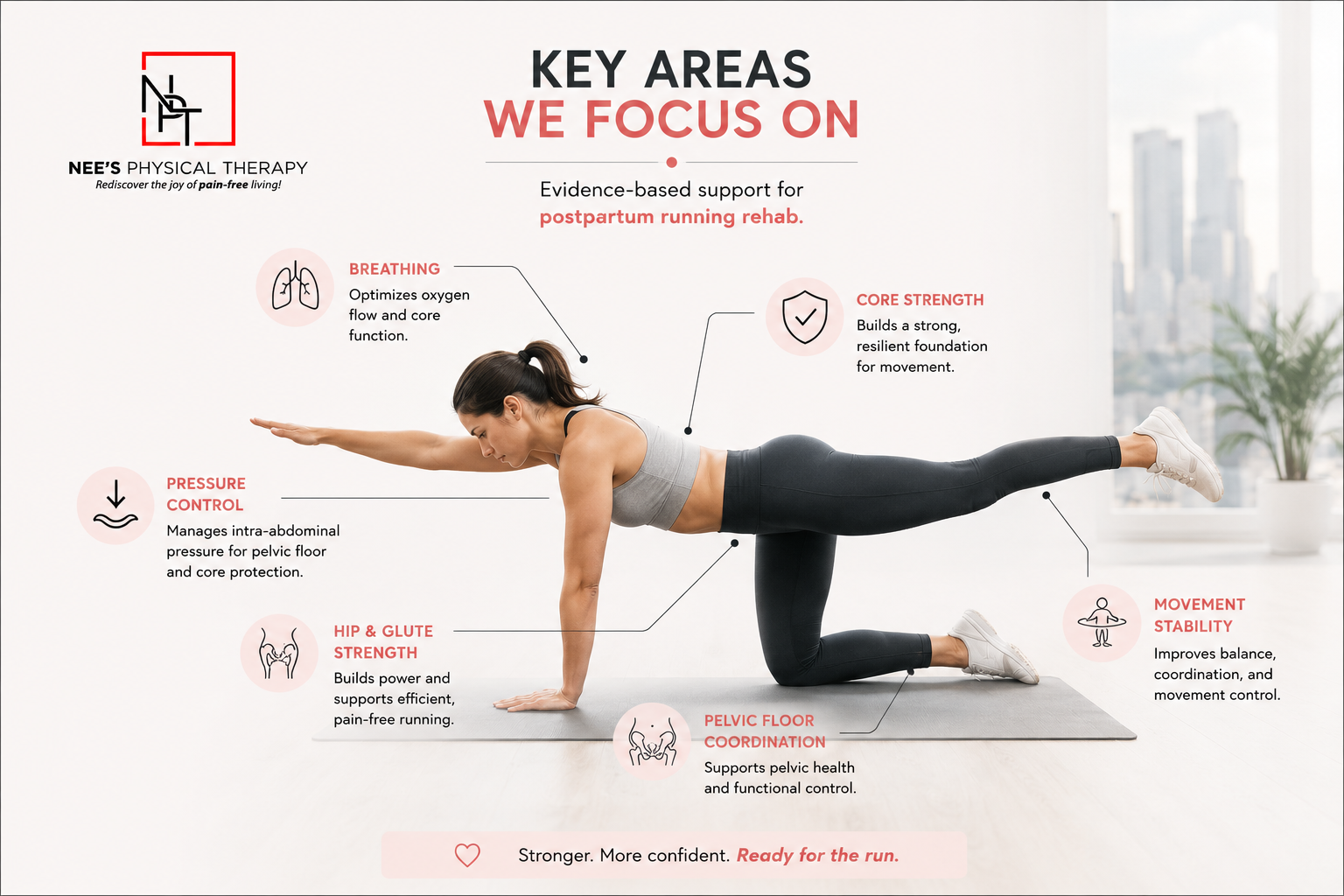
For one mom, the plan may begin with breathing and pressure management. For another, it may focus on hip strength and walking tolerance. For someone else, it may include scar mobility, glute strengthening, soft tissue work, or a gradual walk-run progression.
The plan should feel specific to your body and your life. A mom who is sleeping in short stretches, feeding around the clock, carrying a baby, and trying to return to running needs care that respects the real demands on her body.
A Gentle Way to Build Back to Running
Your return does not need to start with a full run. In many cases, the first steps are much simpler.
You may begin with walking. Then longer walks. Then strength work. Then, gentle impact drills. Then short jog intervals. Then walk-run intervals. Then, there are gradual increases based on how your body responds.
A helpful way to track readiness is to check symptoms during activity, after activity, and the next day.
Ask yourself:
Did I feel heaviness or pressure?
Did I leak?
Did pain appear during or after?
Did symptoms worsen later in the day?
Did I feel supported or strained?
Did I recover well by the next morning?
Your body’s response is information. It helps guide the next step.
When to Slow Down
Please do not push through symptoms because you feel like you “should” be ready. Postpartum recovery does not follow one perfect timeline.
Slow down and consider getting assessed if you notice:
Leaking during impact
Pelvic heaviness or pressure
Pain during or after jogging
C-section scar pain or pulling
Tailbone, hip, groin, or low back pain
A feeling of instability
Symptoms that worsen with fatigue
Fear or uncertainty around movement
You deserve support before symptoms become something you keep working around.
You Are Rebuilding Trust With Your Body
Returning to running postpartum can bring up so much. You may feel grateful for your body and frustrated with it in the same week. You may want your old pace back. You may also feel nervous about every small symptom.
All of that is valid.
Your body has done something huge. It deserves a return that is thoughtful, supported, and paced with care. Running can return with steady rebuilding, better support, and a clearer understanding of what your body needs.
Return to running postpartum is about rebuilding trust with your body, step by step, with the pelvic floor, core, hips, breath, and movement system working together again.
Medical disclaimer: This content is for educational purposes only and does not replace medical advice, diagnosis, or treatment. Postpartum recovery is individual. Please consult your OB-GYN, midwife, physician, or qualified healthcare professional for guidance based on your symptoms, birth history, and recovery.
FAQ
Is external pelvic floor PT private?
Yes. External pelvic floor PT is provided in a private setting. External-only care means there is no internal pelvic exam or internal treatment. Your therapist should explain each part of the session, obtain consent, and keep your comfort central throughout your care.
What should I wear?
Wear comfortable clothing that allows you to move, such as leggings, joggers, athletic shorts, or flexible pants. Since the session is external-only, you remain clothed. Clothing that allows movement helps your therapist assess breathing, posture, hip mobility, strength, walking, and running readiness more easily.
When should I see a pelvic floor PT?
You may consider seeing a pelvic floor PT before returning to running if you have leaking, pelvic heaviness, pressure, pain, core weakness, hip pain, low back pain, scar discomfort, or uncertainty about whether your body is ready for impact. If symptoms are sudden, severe, worsening, or accompanied by fever, heavy bleeding, numbness, weakness, or significant changes in bowel or bladder function, medical evaluation should come first.
