
Back Pain From Sitting: Why Stretching Isn’t Enough
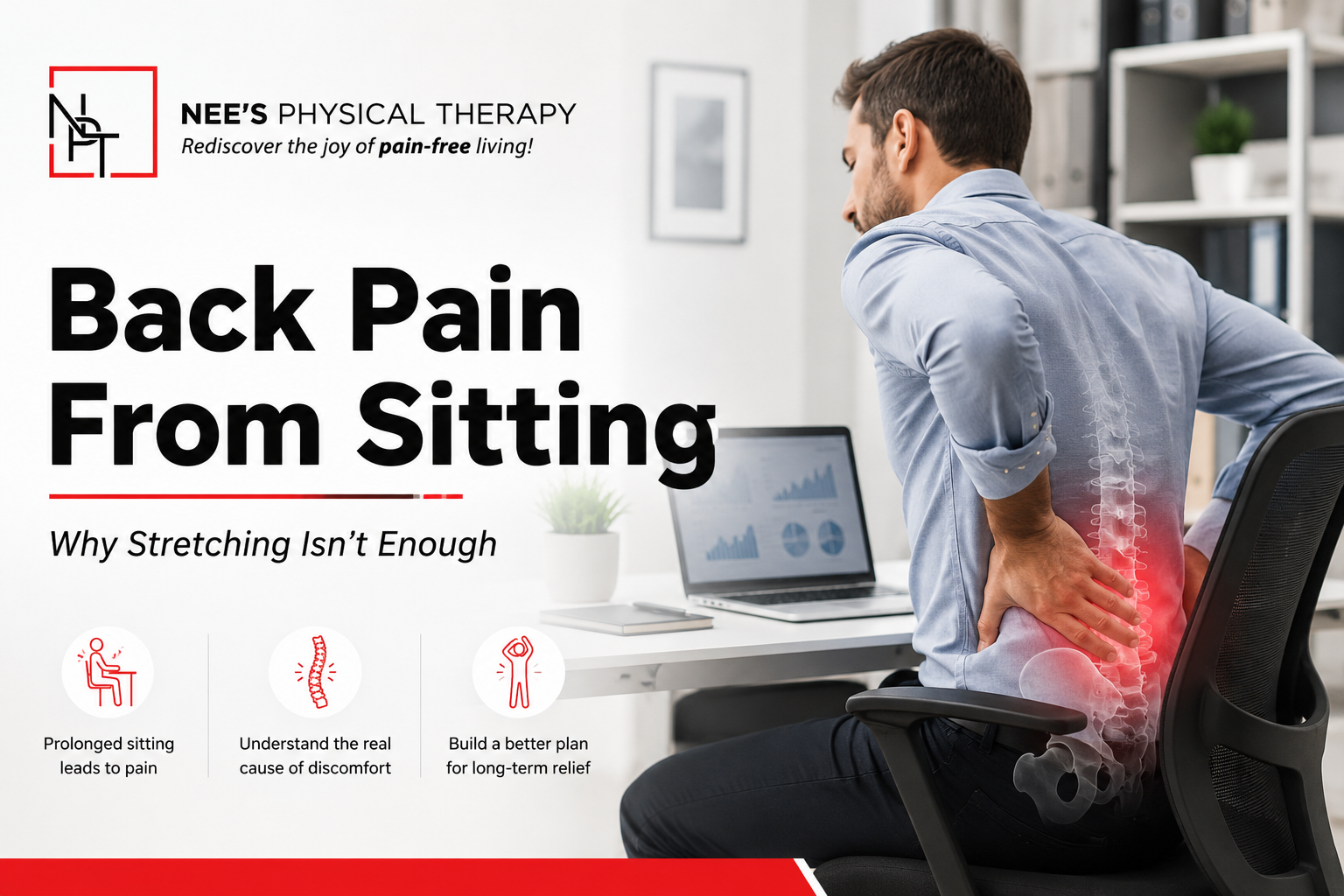
Back pain from sitting all day often improves when the desk setup, movement breaks, strength, sleep position, and workload are addressed together rather than relying on a single stretch.
Read More to find out
Back pain from sitting can sneak up on you. You start the day feeling fine, settle into work, answer a few emails, sit through back-to-back calls, and by late afternoon, your lower back feels stiff, heavy, or irritated. Maybe you stand up and feel like your body needs a minute to “come back online.” Maybe you stretch your hamstrings, bend forward, twist side to side, and feel some temporary relief. Then the same pain returns the next day.
If this sounds familiar, you are not alone. Office back pain is incredibly common, especially for people who spend long hours at a desk, work from home, commute, or switch between a laptop, a couch, a dining table, and an office chair throughout the day.
The frustrating part is that many people try to solve sitting-related back pain with one quick stretch. Hamstrings feel tight, so they stretch the hamstrings. The lower back feels stiff, so they stretch it. Those stretches may feel good in the moment, but they may not address the root cause of your back complaints.
Why Sitting Can Make Your Back Hurt
Sitting is not automatically bad. The problem usually comes from sitting in the same position for too long, especially when your body does not get enough variety throughout the day.
Your back likes movement. Your muscles, joints, discs, hips, and nervous system all respond better when the position changes. When you sit for hours, the same areas keep holding you up. Some muscles stay shortened. Others stay underused. Your hips may feel stiff. Your core may switch off. Your shoulders may round forward. Your lower back may carry more load than it wants to.
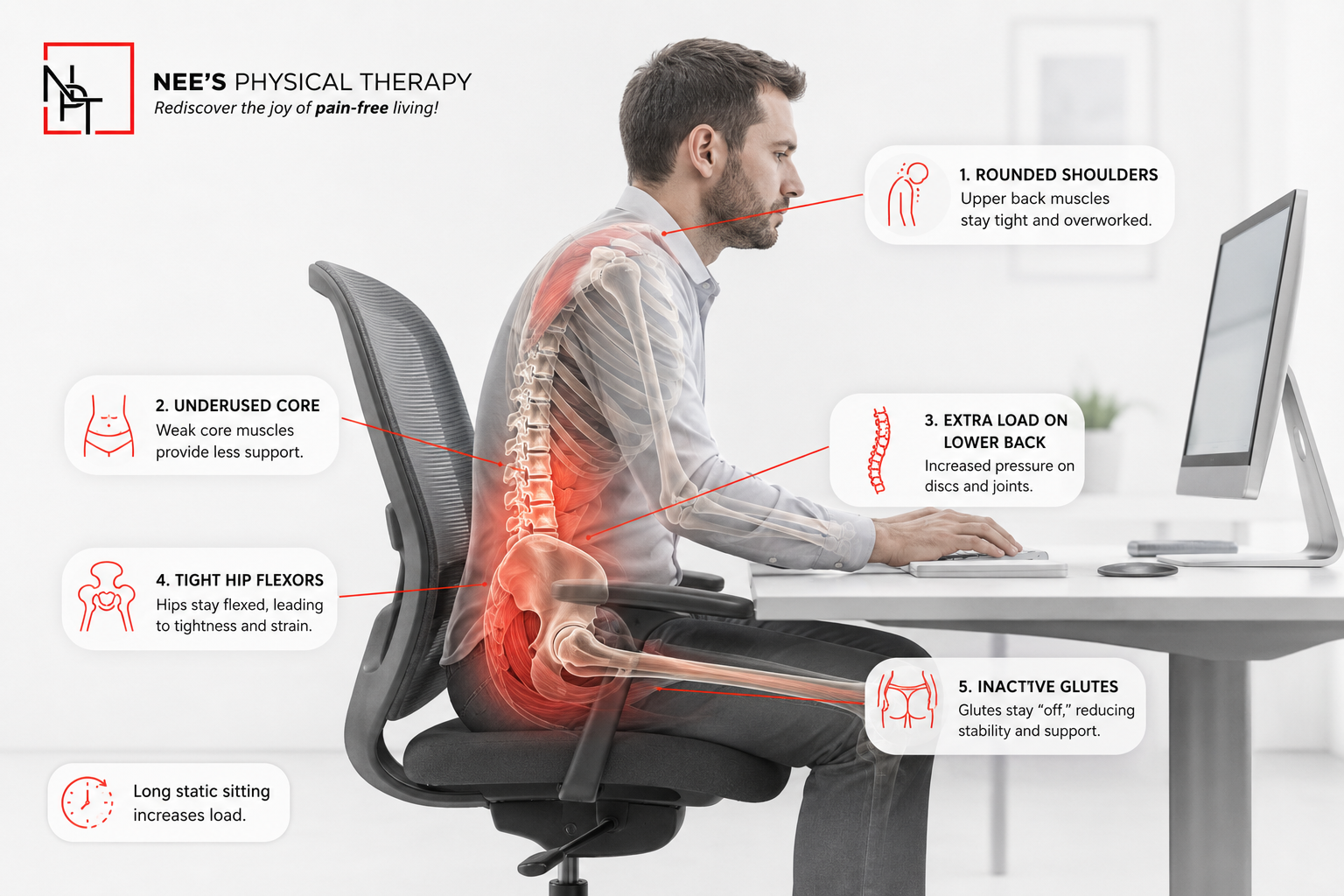
This is why sitting posture matters, but posture is rarely the whole story. You can sit in a “perfect” position and still feel uncomfortable if you stay there for hours. The body needs support, but it also needs motion.
Think about a typical Hoboken office-worker day. You sit for breakfast, sit on the PATH or in the car, sit at a desk, sit through meetings, sit for lunch, sit again to finish work, then sit on the couch at night. Even if your chair is expensive and your setup looks ergonomic, your body may still be craving more movement.
Why Hamstring Stretching May Not Be Enough
Hamstring stretching is one of the first things people try for lower back stiffness. It makes sense. The hamstrings attach near the pelvis, and when they feel tight, they can make the back and hips feel restricted.
But hamstring tightness is not always the main cause of back pain from sitting.
Sometimes the hamstrings feel tight because the hips are stiff. Sometimes they feel tight because the lower back is irritated. Sometimes they feel tight because the glutes are not doing enough. Sometimes the body creates tension as a protective response after long hours in one position.
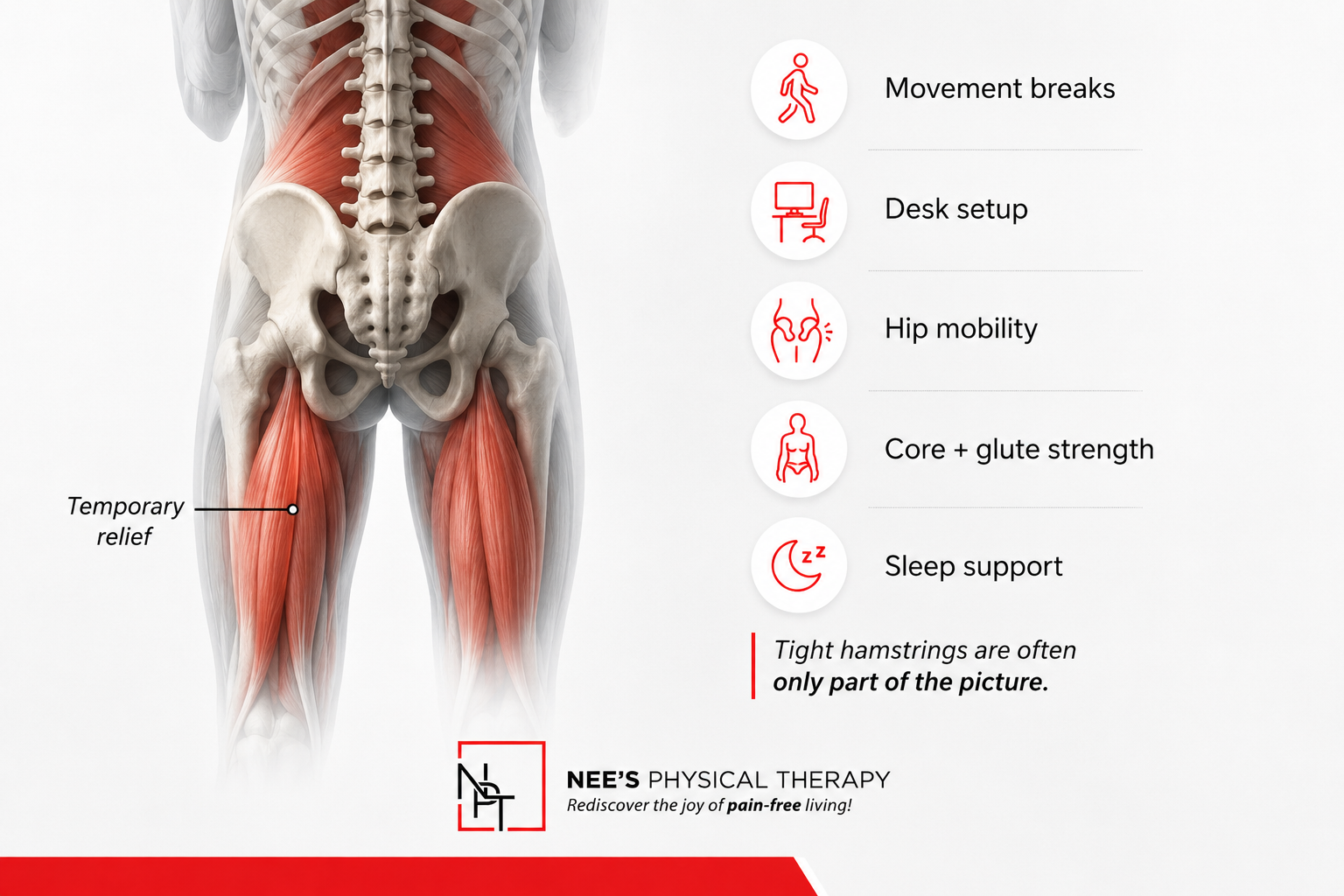
If you keep stretching and the relief does not last, your body may need something different.
It may need:
More frequent movement breaks
Better desk setup
More hip mobility
More core and glute strength
A change in sitting habits
Better sleep posture
Less workload on irritated tissues
A plan to gradually build tolerance
Stretching can be helpful, but it should not be the only strategy.
What Helps With Back Pain From Sitting Beyond Quick Posture Fixes?
A quick posture fix may help for a few minutes. You sit taller, pull your shoulders back, adjust your chair, and feel better briefly. Then work gets busy, your body settles back into its usual position, and the discomfort returns.
A more useful question is: what does your back need across the whole day?
For many people, back pain from sitting improves when a few things work together:
Your desk supports your body better
You change positions more often
Your hips and spine move regularly
Your core and glutes get stronger
Your workload and activity level match what your body can handle
Your sleep position does not keep irritating the same area
You stop waiting until pain builds before you move
This is where physical therapy for back pain can help. A PT can look at how you sit, how you move, what your workday looks like, where you feel limited, and what your body needs to tolerate sitting better.
Desk Setup: Small Changes That Can Help
You do not need a perfect office to improve your setup. Small changes can make a real difference, especially if your current setup forces your body to strain all day.
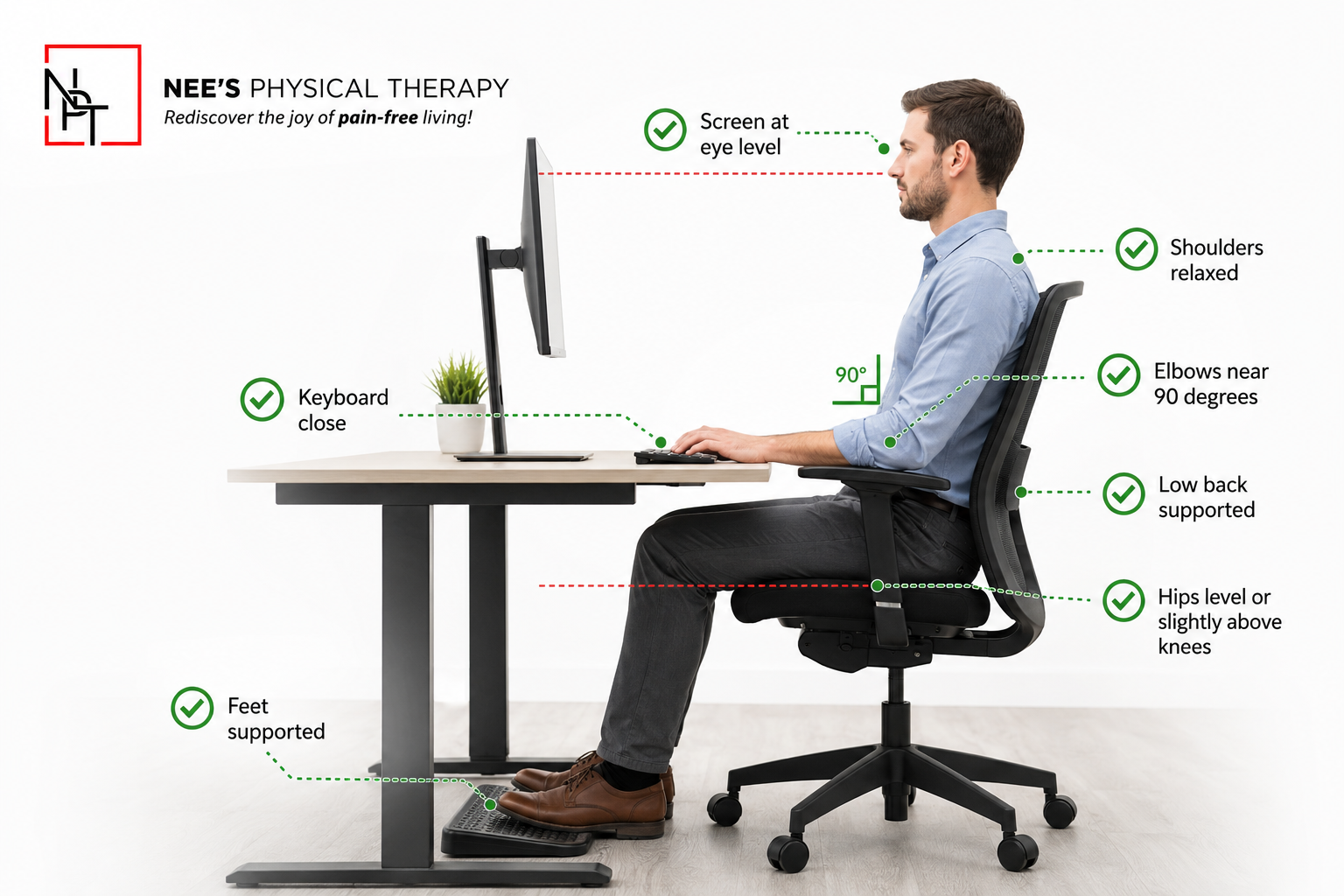
Start with the basics:
Keep both feet supported on the floor or on a footrest
Sit with your hips slightly higher than or level with your knees
Use the back of the chair instead of hovering forward all day
Keep your screen around eye level
Keep your keyboard and mouse close enough that your shoulders can relax
Avoid twisting toward a second screen for long periods
Use a small lumbar support or rolled towel if your lower back likes support
Move your laptop up and use a separate keyboard if possible
If you work from home in a place like Hoboken and your “desk” is sometimes the kitchen table, couch, or bed, your body may be working harder than you realize. A laptop on a low table often pulls your head, shoulders, and spine forward. A couch may feel comfortable at first, but it can keep your hips and back in a rounded position for too long.
Sitting Posture: Aim for Variety, Not Perfection
Many people with back pain become very aware of their posture. They try to sit upright all day, then feel tired from holding that position. That can become its own problem.
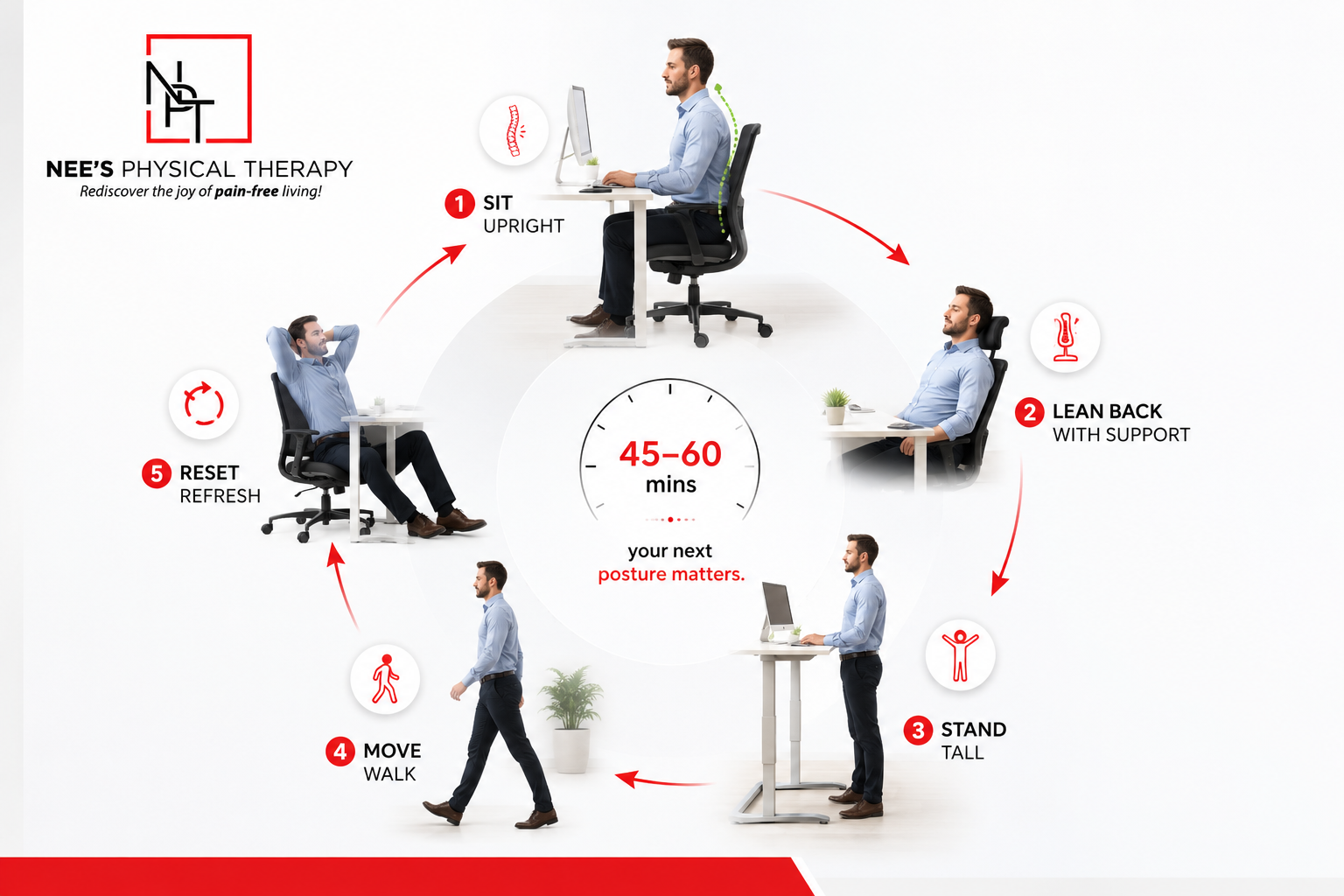
A better goal is posture variety.
Sit upright for a while. Lean back with support for a while. Stand for a call. Walk during a meeting if you can. Shift your feet. Change the chair angle. Move your hips. Reset your spine.
Your next posture is often more important than your perfect posture.
If your back hurts after sitting all day, your body may not need constant correction. It may need more frequent changes before pain builds.
Movement Breaks: A Simple Routine to Try
You do not need a 30-minute workout in the middle of the day to help your back. Short breaks can help your body reset before stiffness builds.
Try this 2-minute movement break every 45 to 60 minutes:
Stand up and take 5 slow breaths
Do 8 gentle standing back bends with hands on hips
Do 10 bodyweight sit-to-stands from your chair
Do 10 calf raises
Do 5 slow hip circles in each direction
Walk for 30 to 60 seconds
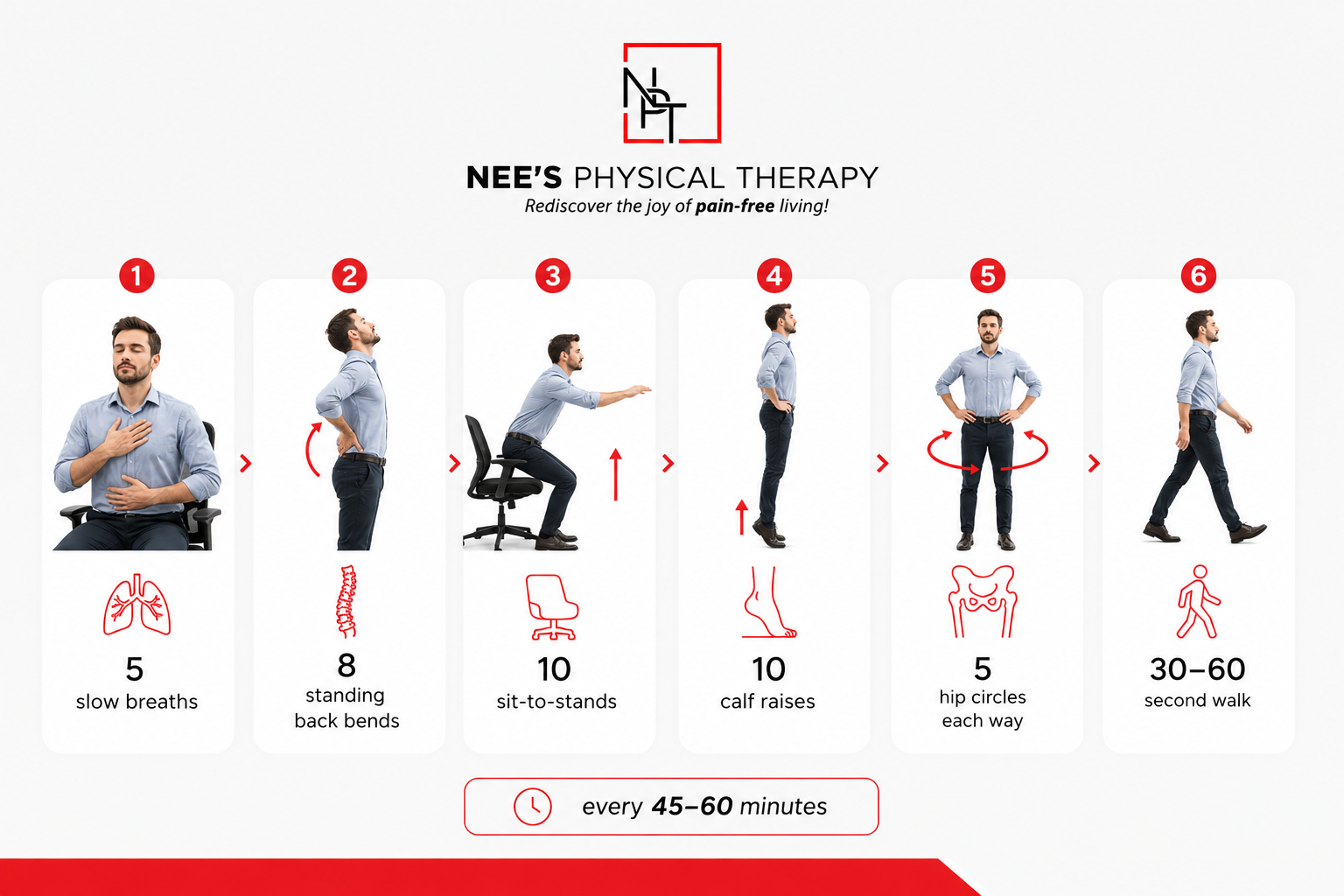
This routine is simple on purpose. You should be able to do it between calls, before lunch, or after finishing a long email.
If your pain increases with any movement, stop and get assessed. Movement breaks should feel relieving or gently activating, not sharp or aggravating.
Strength Matters More Than People Think
When your back hurts from sitting, strengthening may not be the first thing you think of. But strength can be a major part of the solution.
Your back, hips, glutes, and core help support you throughout the day. If those areas lack endurance, your lower back may feel tired faster. Sitting can also reduce how often you use your glutes and hips, especially if your day has very little walking, stairs, lifting, or exercise.
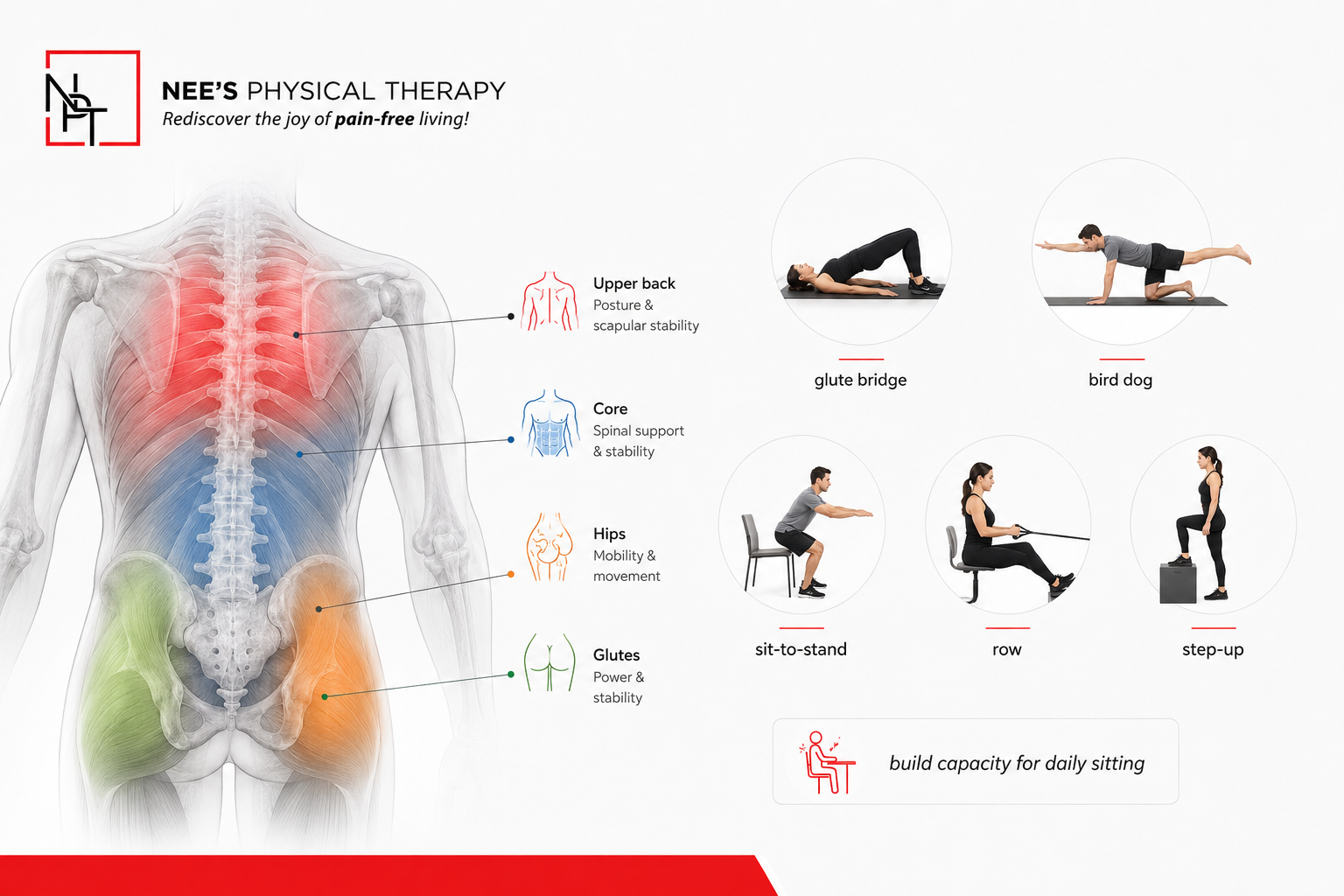
Helpful strength work may include:
Glute bridges
Side steps with a band
Bird dogs
Dead bugs
Sit-to-stands
Hip hinges
Step-ups
Rows for upper back support
Core exercises that do not increase pain
The goal is not to crush your body with a hard workout. The goal is to build enough capacity so your back does not feel overwhelmed by daily sitting, standing, walking, and working.
Sleep Posture Can Also Play a Role
Sometimes, back pain feels like it comes from sitting, but sleep makes the problem worse. If you wake up stiff and then sit all day, your back may start the workday already irritated.
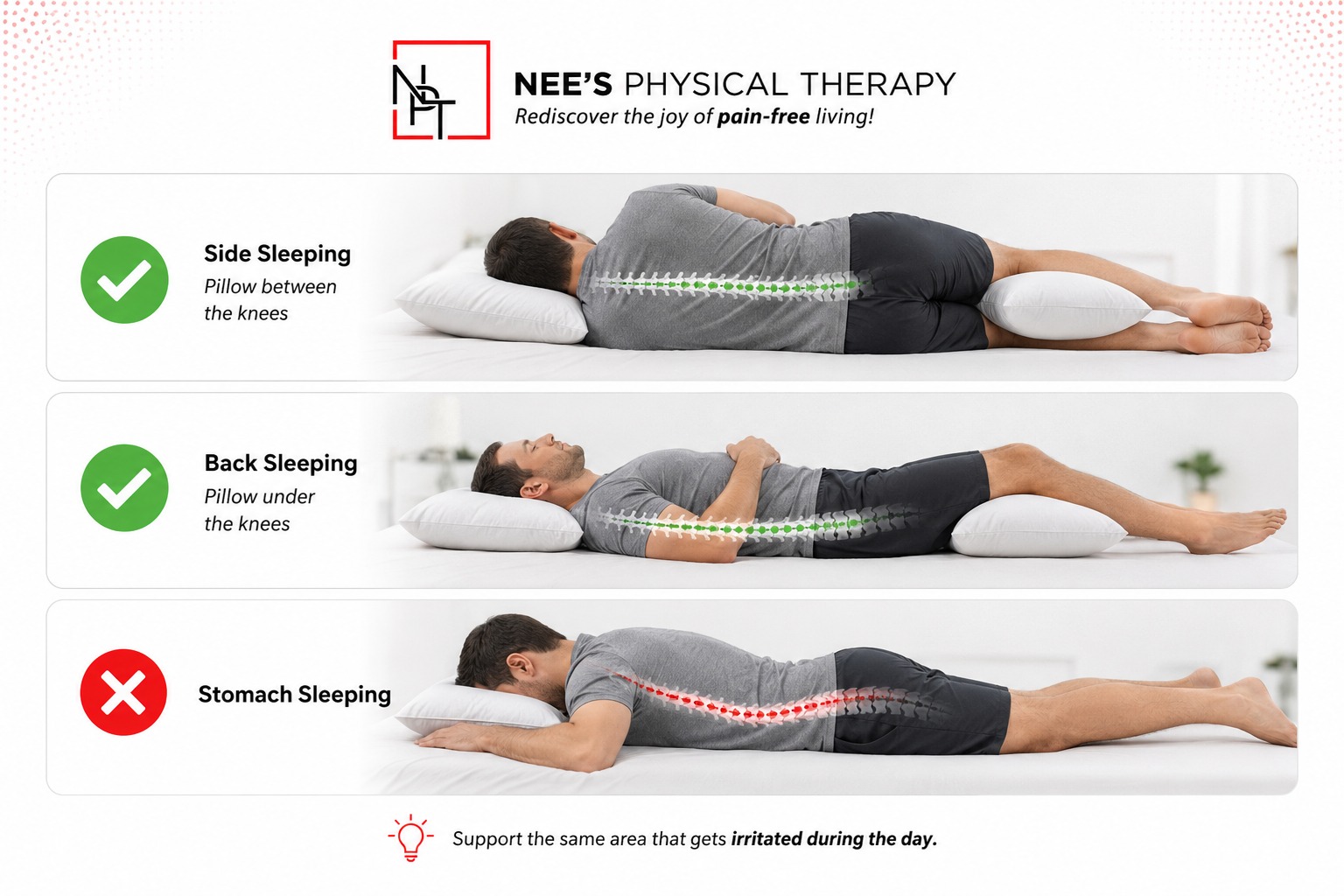
Sleep posture does not need to be perfect, but a few changes may help.
If you sleep on your side, try placing a pillow between your knees so your hips and pelvis feel more supported. If you sleep on your back, placing a pillow under your knees may reduce tension in your lower back. If you sleep on your stomach and wake with back stiffness, your spine may not love that position for long stretches.
When Office Back Pain Needs a Closer Look
If your back pain keeps returning despite stretching, desk changes, and movement breaks, it may be time to get assessed. Pain that lingers or keeps changing your routine usually deserves more context.
A posture evaluation or orthopedic PT assessment may look at:
How you sit and work
How your hips and spine move
Core and glute strength
Breathing and bracing patterns
Walking and daily movement
Sleep position
Exercise routine
Workload and stress on the body
Activities that trigger or relieve symptoms
At Nee’s Physical Therapy in Hoboken, Akanksha Rathod provides 1:1 care for people dealing with back pain, posture-related discomfort, and movement limitations. A session may include posture evaluation, desk setup guidance, movement assessment, manual therapy when appropriate, and a plan to help your body better tolerate work and daily activities.
The goal is to understand why the pain keeps coming back, rather than giving you a generic list of stretches.
Real-Life Sitting Patterns That Can Lead to Back Pain
Back pain from sitting can show up differently depending on your work routine, activity level, and daily habits.
Someone who spends most of the day in meetings may notice stiffness building in the lower back by the afternoon. A person working from home may switch between a desk, a kitchen table, and a couch, creating different stresses on the body throughout the day. Others may sit for a long commute, work at a computer for hours, and then head straight to the gym with already-tight hips and a fatigued back.
Even though the symptoms may feel similar, the reasons behind them can be different. That is why the most effective approach is often individualized rather than relying on the same stretch or posture correction for everyone.
Back pain from sitting can look different for different people.
One person may work in an office near the waterfront, sit through meetings all day, and feel lower back stiffness by 4 p.m. Another may work from home in a small apartment, switch between a laptop and couch, and feel tightness through the hips and back. Someone else may commute, sit at a desk, then go straight into a workout class where their back already feels tense before class begins.
Each person may need a slightly different plan.
For one person, the biggest change may be the desk setup. For another, movement breaks. For another, glute and core strengthening. For another, sleep posture. For many people, it is a combination.
A Better Way to Handle Back Pain From Sitting
Back pain from sitting can be frustrating because the solution is rarely a single magic stretch. Hamstring stretching may help temporarily, but lasting relief often comes from looking at the whole day: how you sit, how often you move, how strong your body feels, how you sleep, and how much load your back is handling.
With the right plan, your body can feel less stiff, more supported, and better prepared for long workdays.
Medical disclaimer: This content is for educational purposes only and does not replace medical advice, diagnosis, or treatment. Back pain can have many causes. If your pain is severe, worsening, radiating down the leg, accompanied by numbness, weakness, bowel or bladder changes, fever, or unexplained weight loss, please seek medical care.
FAQs
Is posture really the cause?
Posture can contribute to back pain, but it is rarely the only factor. How long you sit, how often you move, how strong your hips and core are, how your desk is set up, how you sleep, and how much overall stress your body is carrying can all matter.
A better goal is not perfect posture all day. A better goal is support, variety, and enough movement.
What desk changes help most?
The most helpful desk changes are usually the simple ones: support your feet, bring your screen closer to eye level, keep your keyboard and mouse within reach, support your lower back if needed, and avoid working on a low laptop for long periods.
Your setup should make it easier for your body to relax, not force you to hold yourself up all day.
How often should I take movement breaks?
A good starting point is every 45 to 60 minutes. Even one or two minutes can help. Stand, breathe, walk, do a few sit-to-stands, or gently move your hips and back.
If your back pain builds quickly, you may need shorter, more frequent breaks at first.
