
Pelvic Pain Physical Therapy: How an Orthopedic Lens Can Help
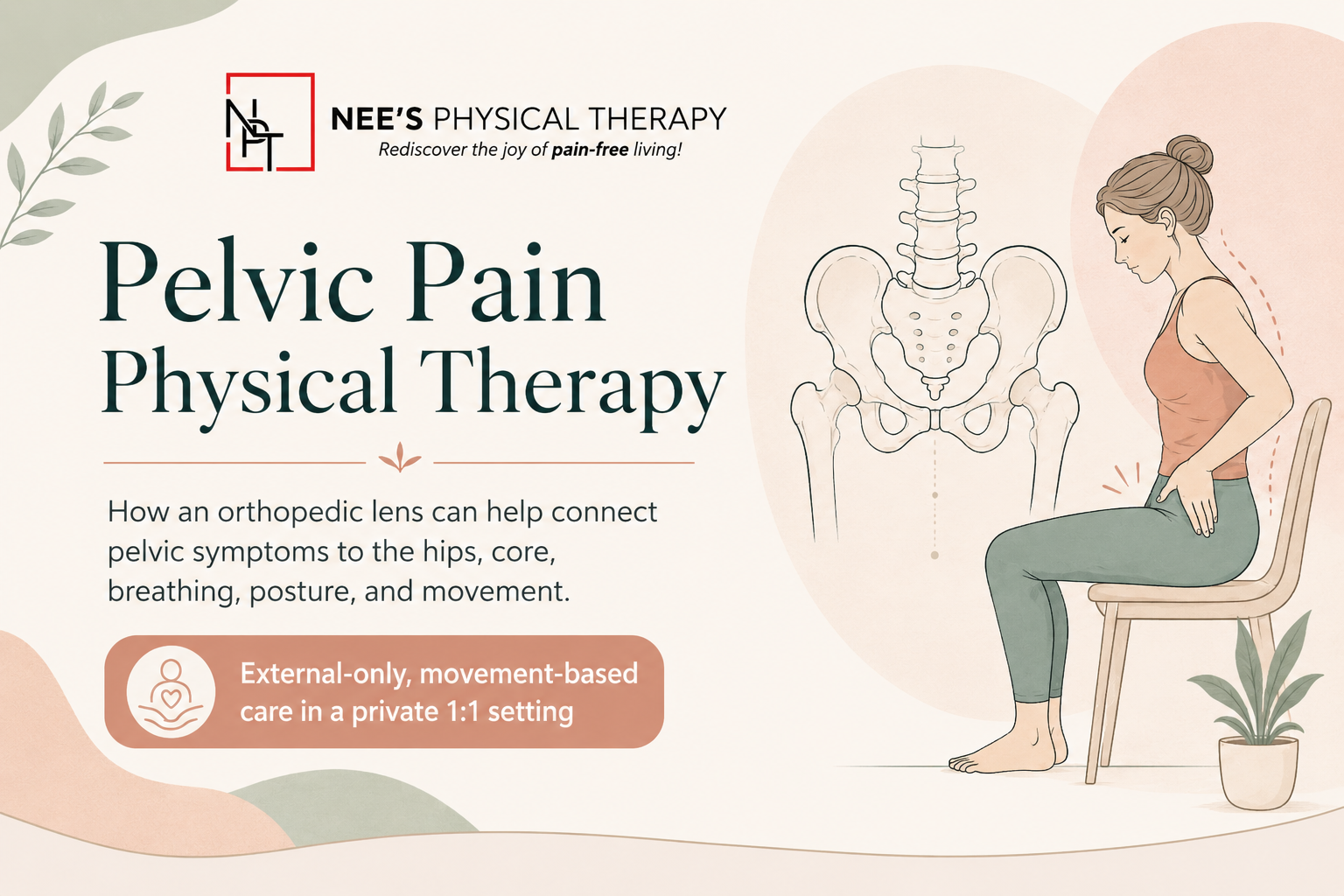
Pelvic pain physical therapy is a specialized approach to understanding pain, pressure, tightness, discomfort, or sensitivity in and around the pelvic region. For many women, pelvic pain is not limited to one exact spot. It may feel like lower abdominal pain, groin discomfort, hip tightness, tailbone pain, low back tension, pressure, heaviness, or pain that feels deeper inside the pelvis.
It may show up while sitting, walking, exercising, using the bathroom, having intimacy, during periods, after pregnancy, or after a long day of carrying stress in the body.
Because the symptoms can feel personal, inconsistent, or hard to explain, many women are left wondering whether they need pelvic floor therapy, orthopedic physical therapy, or a completely different kind of care. The answer is often not either/or. Pelvic pain can involve the pelvic floor, but it can also be influenced by the hips, spine, core, breathing, posture, strength, and the body's response to pressure and movement.
That is where an orthopedic lens can be helpful.
External pelvic floor PT can help connect pelvic symptoms to breathing, pressure, hip strength, core control, posture, soft-tissue sensitivity, and movement tolerance in a private, fully clothed session.
Pelvic Pain Is Often More Layered Than It Feels
When women search for pelvic floor therapy, it is often because something feels off and they want answers. Maybe there is pain while sitting. Maybe there is discomfort during intimacy. Maybe workouts suddenly feel different. Maybe there is pressure or heaviness that becomes more noticeable by the end of the day. Maybe hip pain and pelvic pain seem to show up together, and it is hard to tell where one ends and the other begins.
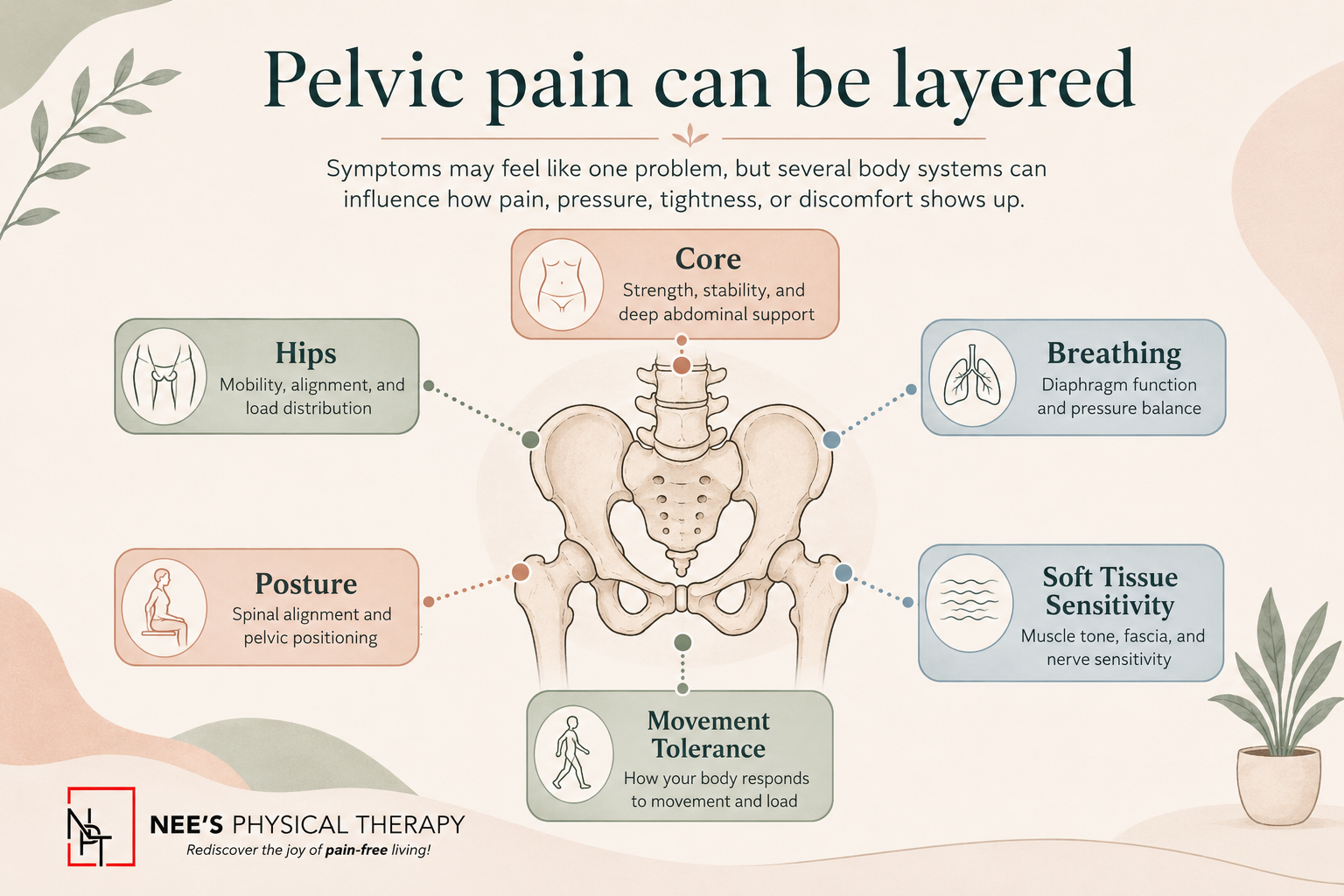
Pelvic pain can be frustrating because it does not always follow a simple pattern. Some days may feel better than others. Certain movements may trigger symptoms. Rest may help temporarily, but the discomfort may return once activity increases again.
This is why pelvic pain physical therapy should not only focus on “where it hurts.” A thoughtful assessment also asks:
What activities bring on symptoms?
What positions make symptoms worse or better?
Is there hip, back, abdominal, or tailbone discomfort too?
Does pain change with breathing, lifting, core work, or exercise?
Does the pain feel surface-level, deep, internal, or difficult to pinpoint?
Is the body guarding or bracing without realizing it?
Are certain muscles overworking because other areas are not supporting well?
These questions help build a clearer picture of what may be contributing to the pain.
Why the Pelvic Floor Does Not Work Alone
The pelvic floor is a group of muscles that supports the pelvic organs and contributes to bladder, bowel, sexual, postural, and core function. But it does not work in isolation.
The pelvic floor works with the diaphragm, abdominal wall, hips, glutes, spine, and nervous system. When you breathe, lift, walk, sit, cough, exercise, or hold tension, these systems interact. If one part is not coordinating well, another part may start compensating.
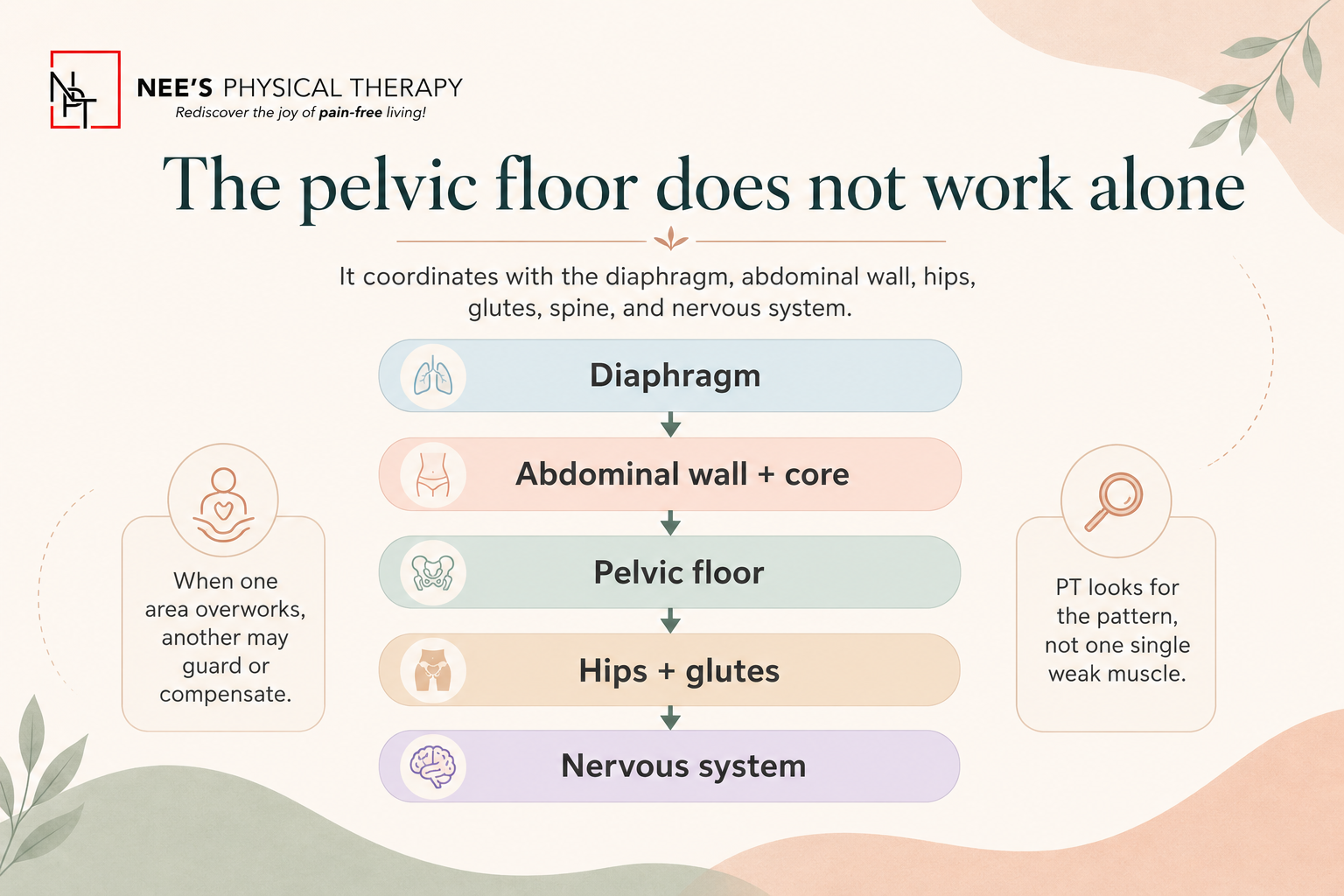
For example, a woman may feel pelvic discomfort because her pelvic floor is overactive, guarded, or sensitive. But the reason it is guarding may involve hip stiffness, abdominal gripping, breath-holding, low back tension, stress, weakness around the hips, or difficulty managing pressure during movement.
This does not mean the pain is “in your head” or that you are doing something wrong. It means the body is connected, and pelvic symptoms often need a wider lens.
What an Orthopedic Lens Adds to Pelvic Floor Therapy
An orthopedic lens looks at how the body moves, loads, stabilizes, compensates, and protects itself. In pelvic pain care, this can be especially useful because the pelvis sits between the hips and spine and responds to forces from both above and below.
A physical therapist using an orthopedic lens may assess:
Hip mobility and strength
Glute and core coordination
Lower back and pelvic movement
Posture and sitting tolerance
Breathing and pressure management
Balance and single-leg control
Squatting, hinging, walking, or stair mechanics
Muscle guarding around the hips, abdomen, back, and pelvis
Soft tissue sensitivity in areas that may be contributing to symptoms
This type of assessment can help identify contributing factors that may not be obvious at first.
For example, if pelvic pain increases during workouts, the issue may not only be the pelvic floor. It may involve how pressure is managed during exertion. If pain appears with walking or stairs, hip strength and pelvic control may be relevant. If symptoms worsen with sitting, the assessment may look at tailbone sensitivity, hip mobility, posture, and how the body holds tension.
The goal is not to blame posture, movement, or one weak muscle. The goal is to understand the pattern.
Hip Pain and Pelvic Pain: Why Women Often Feel Both
Hip pain and pelvic pain often overlap because the hips and pelvis share muscles, joints, nerves, and movement demands. A woman may describe pain in the front of the hip, groin, inner thigh, lower abdomen, glutes, or deep pelvis, and these areas can influence each other.
The hip flexors, adductors, glutes, deep hip rotators, abdominal muscles, and pelvic floor all attach around the pelvis. If the hips are stiff, the pelvis may compensate. If the glutes are not supporting well, the pelvic floor or lower back may work harder. If the inner thighs, hip flexors, or surrounding soft tissues are constantly tense, symptoms may be felt around the groin or pelvic region.
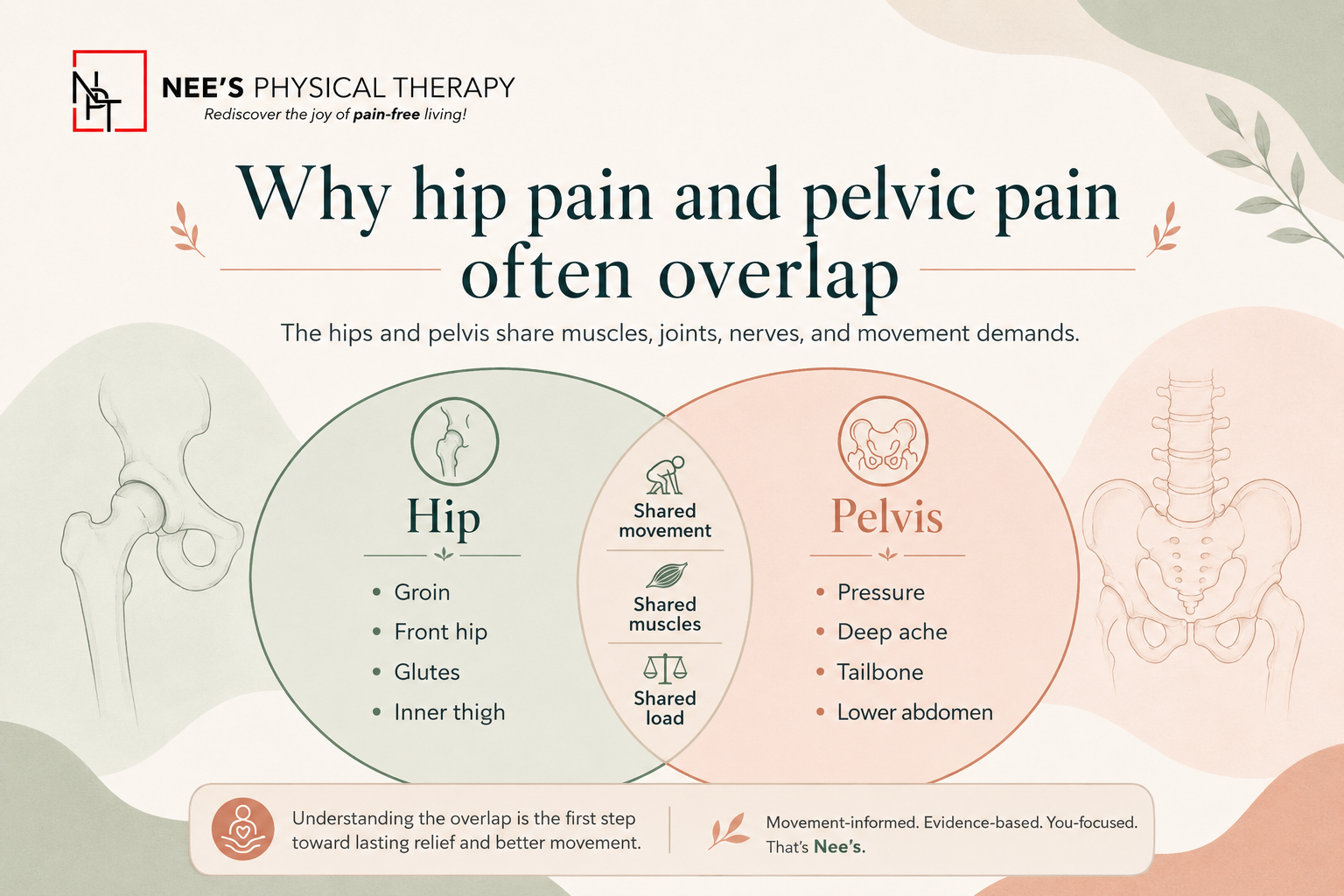
This is why hip pain and pelvic pain should not always be assessed separately. For many women, a complete pelvic floor PT assessment should include the hips.
It may be especially relevant if symptoms show up during:
Walking
Running
Pilates or yoga
Strength training
Squats or lunges
Stairs
Sitting cross-legged
Getting in and out of the car
Long periods of sitting
Understanding the hip-pelvis relationship can help make treatment more specific and less generic.
How Breathing and Pressure Can Influence Pelvic Symptoms
Breathing is often one of the most overlooked parts of pelvic pain physical therapy. The diaphragm and pelvic floor move together as part of the body’s pressure system. When breathing becomes shallow, restricted, or accompanied by constant bracing, the pelvic floor may remain tense or have difficulty coordinating.
Many women unknowingly grip their abdomens, hold their breath during movement, clench their glutes, or brace their pelvic region when they feel stressed, rushed, or uncomfortable. Over time, this can contribute to tightness, pressure, discomfort, or reduced movement tolerance.
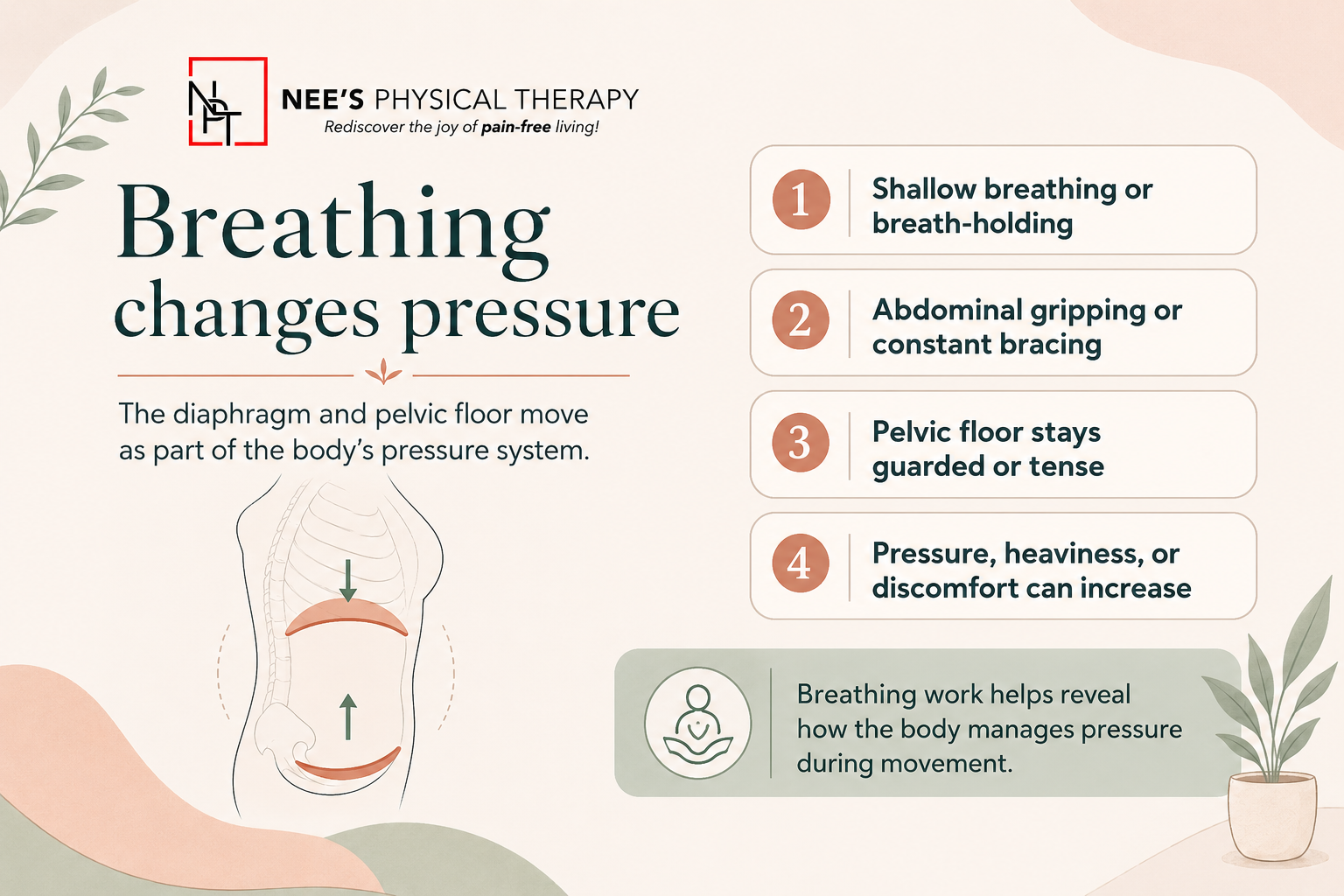
This is why pelvic floor therapy may include breathing work. Not because breathing alone is a cure, but because it helps the therapist understand how the body manages pressure.
For women who experience pelvic pressure during exercise, heaviness after activity, discomfort during core workouts, or symptoms that flare with lifting, pressure management can be an important part of their care.
What External Pelvic Floor Therapy Means
External pelvic floor therapy is pelvic floor care that does not involve internal pelvic assessment or internal treatment. Instead, the therapist evaluates the body externally, assessing movement, strength, mobility, breathing, pressure, posture, soft-tissue tone, and muscle coordination.
This can be a helpful and comfortable starting point for women who want pelvic floor support but do not want internal treatment. It can also be useful when symptoms appear connected to hip mechanics, core control, posture, movement habits, exercise tolerance, or muscle tension around the pelvis.
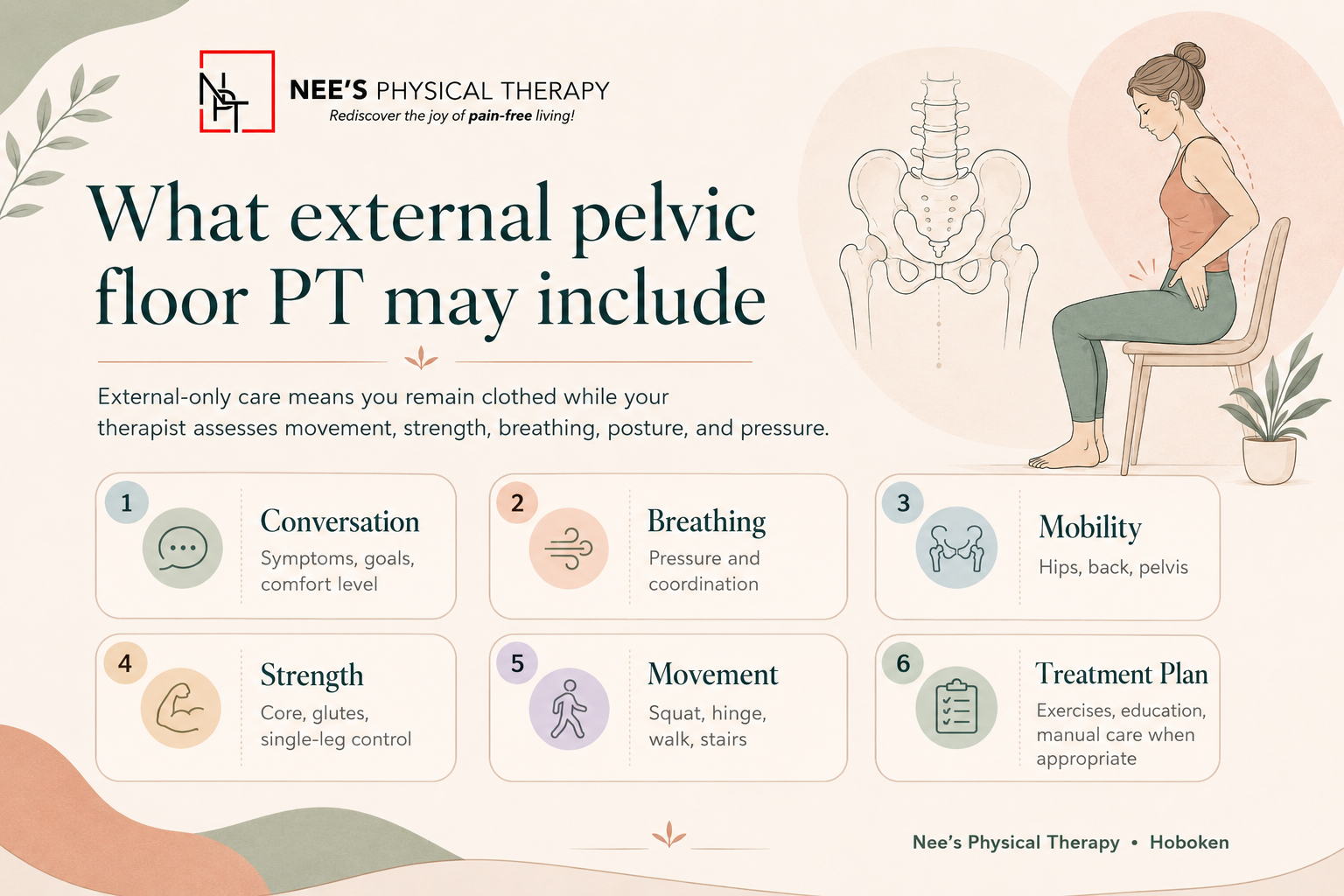
External pelvic floor therapy may include:
A detailed conversation about symptoms and goals
Observation of breathing and posture
Assessment of hip and lower back mobility
External muscle assessment when appropriate
Core and glute strength testing
Movement analysis
Education around pressure and daily habits
Soft tissue or manual therapy techniques are used where appropriate
Guided exercises to improve coordination and tolerance
External care can still provide meaningful information. It can help identify whether the body is bracing, gripping, compensating, avoiding certain movements, or struggling to coordinate during activity.
It can also support women who describe pain that feels deep or internal by looking at external contributors that may be feeding into that discomfort, including hip tension, abdominal guarding, pelvic positioning, soft-tissue sensitivity, and movement-related strain.
What to Wear to an External Pelvic Floor PT Appointment
For an external pelvic floor PT appointment, wear comfortable clothing that allows you to move. Leggings, joggers, athletic shorts, or flexible pants are usually helpful because your therapist may assess walking, squatting, hip movement, breathing, or basic strength.
This does not mean the session is a workout class or that you need to arrive in gym clothes. It simply means clothing should allow the therapist to observe movement comfortably while you remain clothed.
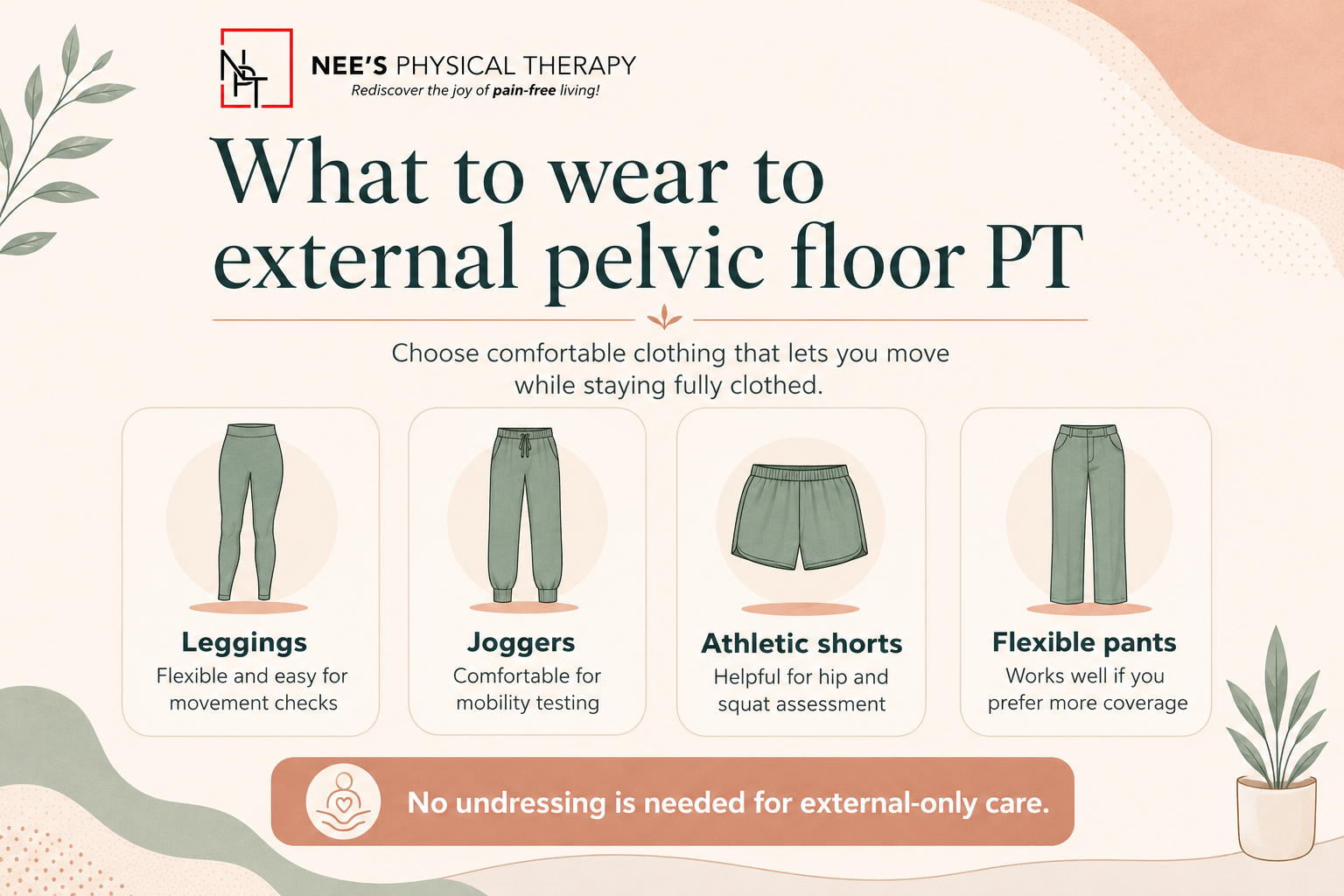
You should not need to undress for external-only care. Your therapist should explain what is being assessed, obtain your consent, and ensure you feel comfortable throughout the session.
Privacy and Comfort Matter in Pelvic Floor PT
Pelvic pain can feel difficult to talk about. Many women delay seeking help because they feel embarrassed, unsure what to expect, or worried that pelvic floor therapy will automatically involve internal work.
External pelvic floor PT can make the first step feel more approachable.
A private setting, clear explanation, and consent-based care are essential. You should know what is happening in the session and why. You should be able to ask questions. You should be able to pause, decline, or modify anything that does not feel right.
Pelvic floor therapy should never feel rushed, dismissive, or uncomfortable. The care should feel respectful, collaborative, and centered around your symptoms and goals.
How Nee’s Physical Therapy Approaches Pelvic Pain
At Nee’s Physical Therapy in Hoboken, Akanksha Rathod approaches pelvic pain with an orthopedic lens and a focus on external pelvic floor PT. Her training includes Herman & Wallace Level I, and her sessions are designed to understand how pelvic symptoms may connect with the broader body, including the hips, core, breathing, posture, movement tolerance, and soft tissue sensitivity.
Care is provided in a 1:1 setting, which allows time to understand each woman’s symptoms, concerns, and comfort level. For some women, treatment may focus on movement and exercise. For others, it may include breathing work, pressure management, hip mobility, strengthening, or soft-tissue/manual therapy, where appropriate.
This can be especially helpful for women who are looking for pelvic floor therapy but want a private, movement-based, external-only starting point. The goal is not to rush into treatment or assume every symptom has the same cause. The goal is to understand what may be contributing and build a plan that feels specific to the person.
When Should You See a Pelvic Floor PT?
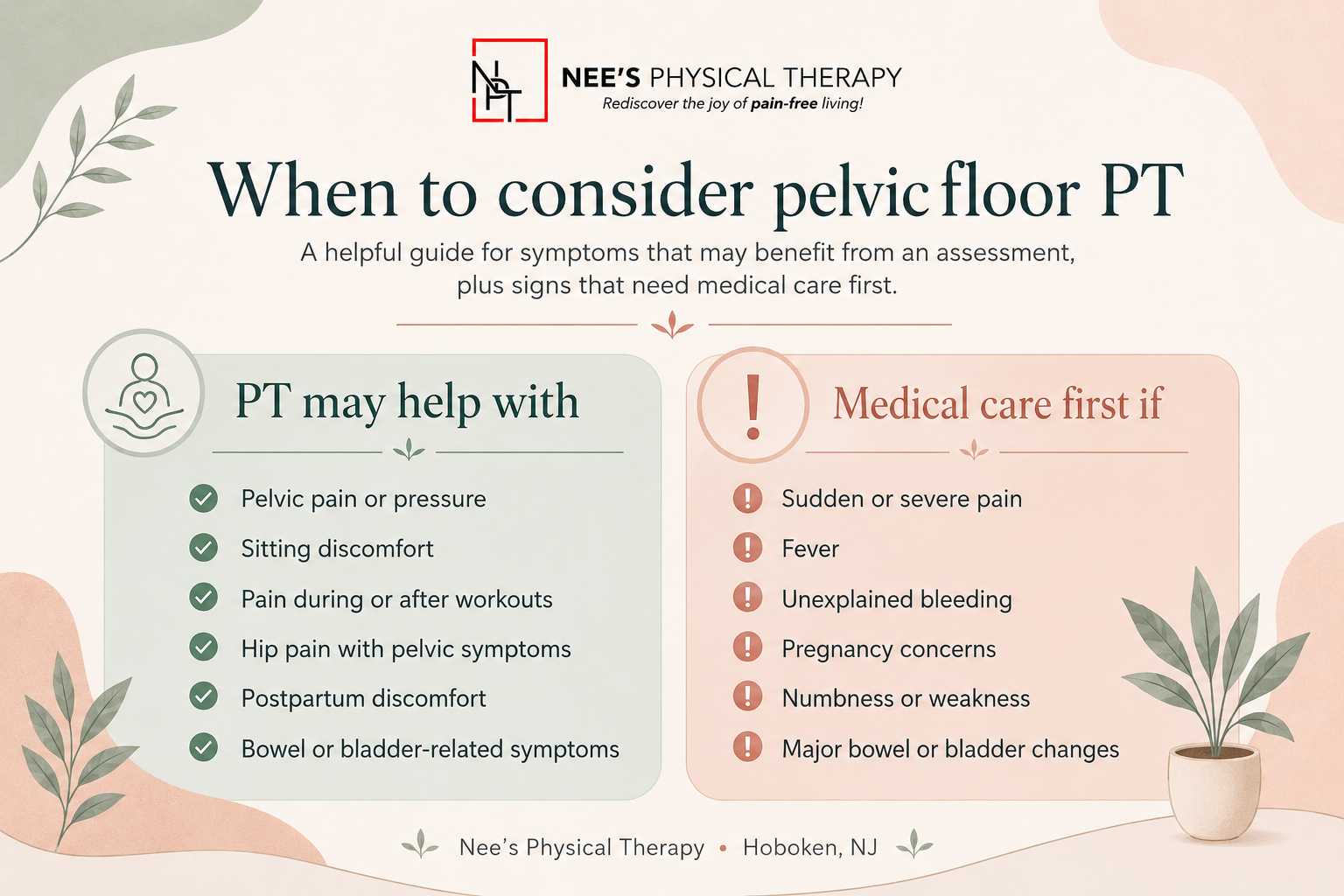
You may want to see a pelvic floor PT if you are experiencing pelvic pain, pressure, tightness, heaviness, discomfort with sitting, pain with intimacy, pain during or after exercise, tailbone pain, hip pain with pelvic symptoms, postpartum discomfort, or symptoms that affect your bowel or bladder habits.
It may also be helpful if you have been stretching, resting, or modifying activity, but the symptoms keep returning.
However, physical therapy is not a replacement for medical care. If pelvic pain is sudden, severe, worsening, associated with fever, unexplained bleeding, pregnancy concerns, major bowel or bladder changes, numbness, weakness, or symptoms that feel urgent, it is important to speak with a medical provider.
A More Complete Way to Understand Pelvic Pain
For women seeking pelvic floor therapy, it can be reassuring to know that pelvic pain does not have to be reduced to one muscle or one explanation. The pelvic floor matters, but so do the hips, core, breathing, posture, pressure system, soft tissue sensitivity, and the way the body responds to daily movement.
An orthopedic lens helps bring these pieces together. It can identify contributing factors, make symptoms easier to understand, and create a more thoughtful starting point for care.
Pelvic pain physical therapy can help women move from confusion to clarity, with an approach that respects both the sensitivity of their symptoms and the body's complexity.
Medical disclaimer: This content is for educational purposes only and does not replace medical advice, diagnosis, or treatment. Pelvic pain can have many causes. Please consult a qualified healthcare professional for guidance based on your individual symptoms.
FAQ
Is external pelvic floor PT private?
Yes. External pelvic floor PT must be provided in a private setting. External-only care means there is no internal pelvic exam or internal treatment. Your therapist should explain each part of the session, obtain consent, and keep your comfort central throughout your care.
What should I wear?
Wear comfortable clothing that allows you to move, such as leggings, joggers, athletic shorts, or flexible pants. Since the session is external-only, you remain clothed. The clothing simply helps your therapist assess movement, posture, breathing, hip mobility, and strength more easily.
When should I see a pelvic floor PT?
You may consider seeing a pelvic floor PT if pelvic pain affects sitting, walking, workouts, intimacy, bowel or bladder habits, postpartum recovery, hip movement, or daily activities. If symptoms are sudden, severe, worsening, or accompanied by fever, bleeding, numbness, weakness, or significant changes in bowel or bladder function, medical evaluation should come first.
